
SUNDAY SCARIES: The World Is Watching
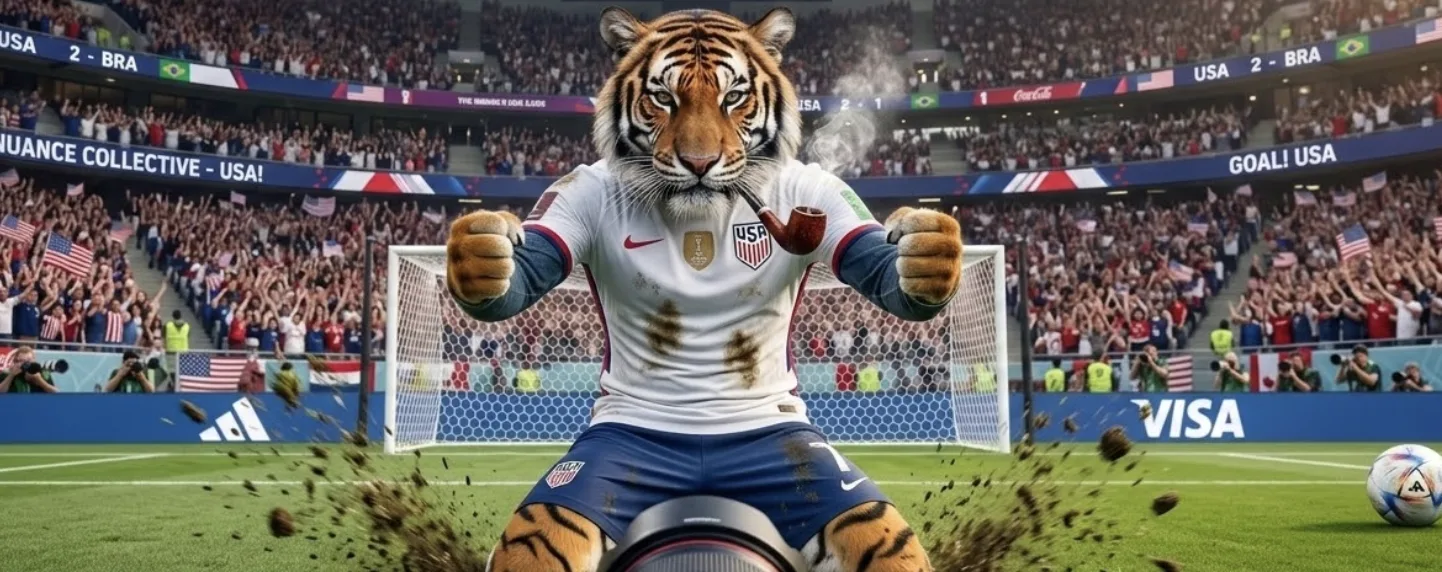
In 1994, the World Cup came to a United States that didn't really care yet. We had no professional league — we had to promise to create one just to win the host bid — and most of America treated the whole thing as a charming foreign houseguest who'd be gone by August. I was 15 years old, and spent the Fourth of July with my friends watching a far better Brazil side beat us easily, (Brazil was even a man down for most of the second half and we still couldn't put a shot on their goal — which made it much more embarrassing).
1. The Last Time We All Watch the Same Thing
FIFA's favorite number is 500 million — the ticket requests that flooded in during the application window. It's a real number, and a nearly useless one, because those are lottery entries, not seats. The seats themselves are wobbling: roughly four in five host-city hotels report bookings tracking below forecast, and the U.S. hospitality industry has quietly started calling the tournament a “non-event.”
But the number that actually matters was never at the gate. It's on the screens. The final alone will draw well over a billion people at the same time, all of them living the same ninety minutes in the same order, gasping at the same save.
Sit with how strange that's become. We spent ten years and a fortune teaching every screen to show a different person a different thing — your feed, my feed, no two alike, each one tuned to keep us watching alone. (I'm not above it. I haven't made it through anything live without a second screen in my hand since roughly 2012.) And the biggest cultural event of the decade runs flat in the other direction. You can't personalize a World Cup. You can't serve a calmer cut to the people who find it stressful, or A/B test the ending. It happens to everyone, at once, or it doesn't happen at all.
Takeaway: Synchrony — a billion people choosing the same ninety minutes — is the one piece of inventory nobody can print more of.
(Sources: FIFA; AHLA via Fortune; NPR)
2. FIFA Knew 32 Teams Was Better. (But It Expanded to 48 Anyway).
This is the first time the field has grown in twenty-eight years: 32 teams to 48, 64 matches to 104, the whole machine on track to clear eleven billion dollars. And the part FIFA would rather you not go looking for sits in its own files — the organization's 2016 research concluded that the 32-team format produced the highest-quality football. They expanded anyway, because more teams means more groups, more markets, more broadcast windows, more rooms to sell. Finalists will now play eight games to lift the trophy instead of seven.
None of which is a scandal, exactly. It's just worth being honest about the order of operations. The tournament got bigger by every measure that shows up on an invoice, and the quality of the thing itself got argued about afterward, once the math was already done.
Takeaway: You can always add more; the discipline is knowing what gets worse when you do.
(Sources: Associated Press; CBC; ESPN)
3. Everyone's Invited. Not Everyone Can Come.
The whole promise lives in the iconography: the world, together, for once. The fine print reads a little differently.
The U.S. is hosting under a 19-country travel ban, plus a $15,000 entry bond for visitors from fifty more nations, several of them qualifiers. The carve-outs are where the real position shows. Players, coaches, and staff were exempted outright — the talent gets in. Ordinary fans got a narrower deal: the bond waived, but only if they'd already bought a ticket. Amnesty International and more than 120 civil-rights groups issued a travel advisory regardless, warning visitors about arbitrary denials of entry and phone searches at the border.
So the stars walk through, the fans wait at the desk, and some never get the letter at all. Meanwhile the FIFA president and the U.S. president posed together in the Oval Office, grinning, a ticket to the final held up between them like a prize neither of them had to qualify for.
Takeaway: A brand built on belonging is only as big as the people it actually lets in.
(Sources: ESPN; CNN; Amnesty International via Al Jazeera)
4. The Amurica Halftime Show Comes to Soccer
For the first time ever, the final will break for a halftime show — curated by Coldplay's Chris Martin, staged at MetLife, and openly modeled on the Super Bowl.
Here's what makes it strange. America spent thirty years falling for this sport in its actual form — the one that doesn't stop, that asks you to sit through forty-five uninterrupted minutes and offers nothing at the break but grown men drinking Lucozade in a tunnel. We came to it on its terms, and we came to love it precisely because it wasn't ours. Then, the first chance we get to host the whole thing, the instinct is to dress it back up in our own clothes: three-quarters of matches on U.S. soil, NFL stadiums, dynamic pricing, and an honest-to-god “takeover” of Times Square. The most-watched final on earth, retrofitted into the one American format nobody abroad ever asked it to become.
We already came around to it. So why are we so determined to make it sound like us?
Takeaway: Copy the format that worked often enough and you sand off the only reason it worked.
(Sources: NBC News; FIFA; ESPN)
This Week's Red Thread: Hard on Purpose
Look at the four signals together and it's the same motion, over and over. FIFA scaling the field. The border thinning the crowd. The Super Bowl machinery dressing up the final. Every one of them an improvement, applied to a thing that never asked to be improved — and the World Cup survives all of it anyway, because the core is too simple to wreck. Everyone, somewhere, stops and watches the same thing together.
And then there's the other one, running this very afternoon.
Today in Monte Carlo, a nineteen-year-old starts from pole around the hardest streets in the sport. Kimi Antonelli — Mercedes, championship leader, Italian superbaby with four wins on the bounce — put it on his first Monaco pole yesterday, ahead of Verstappen, while Leclerc, the local kid, reached for the same lap and buried it in the wall at Tabac.
That's Monaco for you. The barriers sit an arm's length from the car, there's almost no way past anybody, and the driver who nails Saturday usually wins Sunday. By every metric a modern sport is supposed to chase, it's broken. And it remains the one race every driver on the grid would trade half a season to win.
The part that would short-circuit any optimizer or performance-media maniac is that the Monégasque organizers will simply never touch it. No wider corners, no overtaking gimmicks, no fixing the product. But the difficulty is the product.
You don't smooth out the one test that tells you who can actually drive; you protect it, and it stays worth more than any smoother, safer circuit precisely because it refuses to become one.
Two of the most valuable properties in global sport, running in the same week, built on opposite bets. The World Cup survives the people trying to make it bigger. Monaco survives because it never let them near the streets in the first place.
Somewhere in your business is your Monaco.
The thing that doesn't scale, doesn't test well, doesn't fit the playbook, and is the whole reason the best ones choose you in the first place.
The pressure to smooth it out will never once let up. Don't.
— NB