SUNDAY SCARIES: What I Got Wrong in the First Year
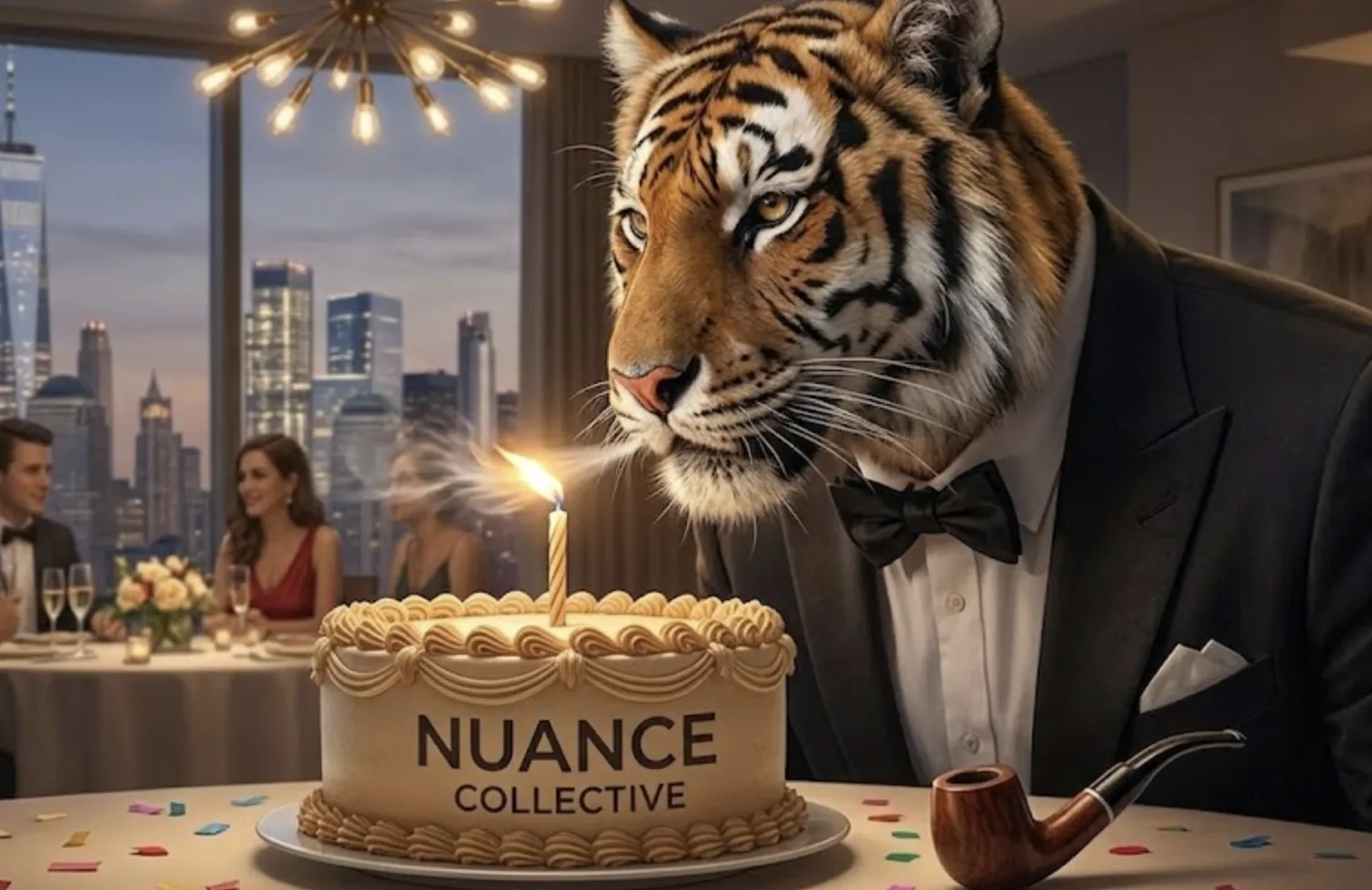
TNC turns one this week. The cliche on an anniversary is to list what went right. It felt self-serving. So here's a more useful version: four things I was certain about that were, in fact, wrong.
1. I Thought Intention Was Stronger Than Physics
We built TNC to be 100% remote and across multiple time zones on a belief that passion and intention could overcome the space-time continuum. That if everyone loved working together and cared enough, the practical details like geography would sort themselves out.
What I'd underestimated wasn't anyone's commitment. I am constantly astonished at the brilliant members of our team and the way they consistently give 200% on everything. It was the dumb physics of physical presence — the atoms of information that can't be imparted in the gap between two time zones. Because unexpected inspiration occurs in the half-second of two people looking at the same thing in the same room and one of them says “oh — wait.”
That moment doesn't get magically put into even the most thoughtful meeting agenda, nor is it captured on even the smartest notetaker, or passed through osmosis on Slack. Zoom can be both a miracle and a thick glass partition, and no amount of best efforts will make that not the case.
Takeaway: Even the most dedicated team in history can't walk through walls to shoot the shit.
2. The Business Plan Was Backwards
My business plan for TNC was based on a working split between engagements of about 70/30. Seventy percent quick-turn engagements with our AI tools at the core and thirty percent retainer work. Said naively, it was “get in, be brilliant, get out, do it again before the coffee's cold.” A business designed around being a sharp knife you grab and slice through the problem and chuck it back in the drawer.
Our AI tools, Nu Factor and LLM Mirror among others, are officially trademarked and ever-evolving, and they have been amazing for our strategic advantage. But what I got wrong was that what companies actually wanted wasn't the quick cut. It was the next step and the step after that. The most wonderful and humbling part of this whole year has been the trust from every one of our partners. Instead of it being a fluke, more than 70% of the time we've been given more work and more responsibility.
As a Creative Director who made a business plan, I am disappointed in myself. As the CEO, I am thrilled by being wrong and love every minute of our work.
Takeaway: TNC planned to be fast and frequently forgettable. We've ended up with the deepest partnerships and business alliances.
3. I Bet That Human-Made Would Beat AI
All year I preached the same sermon every Sunday. “What's real will win.” “The human thing cuts through.” “Slop will never succeed.” The Gospel according to hope from someone who admits to loving the power of AI.
But alongside the hope, I was running a scoreboard under the table — real on one side, AI slop on the other. So there I was, praising the machine on Thursday and sneering on Sunday, pretending those were the same posture.
A lot of things rang up the scoreboard over the past year but these two stung the most:
The song called “I Run” that went viral last winter — Suno-stitched to sound just close enough to HAVEN to fool her fans, and then the AI song was so popular the human HAVEN was basically forced to record it again so it would be profitable on streaming.
The dagger was last week when Ferrari unveiled the Luce, its first EV, designed by Jony Ive's LoveFrom. Arguably the most celebrated designer alive, Ive showed everyone that it took a human to design a Ferrari so unrecognizable that even the former chairman, Luca di Montezemolo, was publicly begging “I hope they take the horse off that car.”
Ferrari lovers like me were repulsed, but the sharpest mockery was thousands of people on Threads and X running images of the EV through AI with the prompt “but make it look like a Ferrari,” and the machine creating designs Pininfarina would have preferred.
Takeaway: The score is still in my favor, but my commitment to human creative superiority is not unconditional.
4. I Thought I Could Wear All The Hats
It's a cliche, but it's a cliche for a reason (as the cliche goes). I told myself I wasn't going to be the founder who tries to do it all and I failed.
On one account I attempted to be the creative director, the account director, the president, and the project manager. In the same meeting. Not out of necessity, but out of an egotistical and idiotic confidence that I could be all four and be excellent in every one; I was like a guy juggling chainsaws, who's also offering to drive you home.
Takeaway: You can sit in multiple chairs, but you can only be great in one. So shut up, get out of the way, and let brilliant teammates be brilliant.
This Week's Red Thread: I Regret Nothing
Here's another lesson I learned this year. The IRS caps the business deduction for a client gift at $25. Per client. Per year.
You can write off the dinner, the flights, the gas, even the accountant who tells you about the cap. But the holiday thank-you gift itself is capped at twenty-five bucks, which is never going to be enough to truly thank those partners for trusting us with their business.
And that's a rule for the whole year, honestly. Generosity, conviction, optimism — all of it will eventually run into a ceiling set by something or someone else.
But the truth remains: not one of these was a regret.
A regret is something you'd take back, and I wouldn't take back a single one.
(I'd even probably reach for all the hats again — I'd just drop them faster.)
Because I have two partners in Anne Faricy and Terry Seitz who are better than I am at a long list of things, and a TNC team more impressive than the three of us combined. Every wrong on this list was me briefly forgetting that. It's a joyful stupidity, and I'd choose it over the safe version every time.
The wrongs all came from the same place that makes this work possible to begin with: Audacious optimism.
You don't get one without the other — every bet I lost this year was the same bet that makes anything worth doing.
Optimism is the bet that actually costs you when it misses, which is the whole reason it's worth making. Cynicism never pays out and never pays up. It just sits in the cheap seats being right about fires it lit itself.
An audacious year of being wrong from time to time beats a year of being safely, silently right.
— NB