
SUNDAY SCARIES: The Revisionist Present
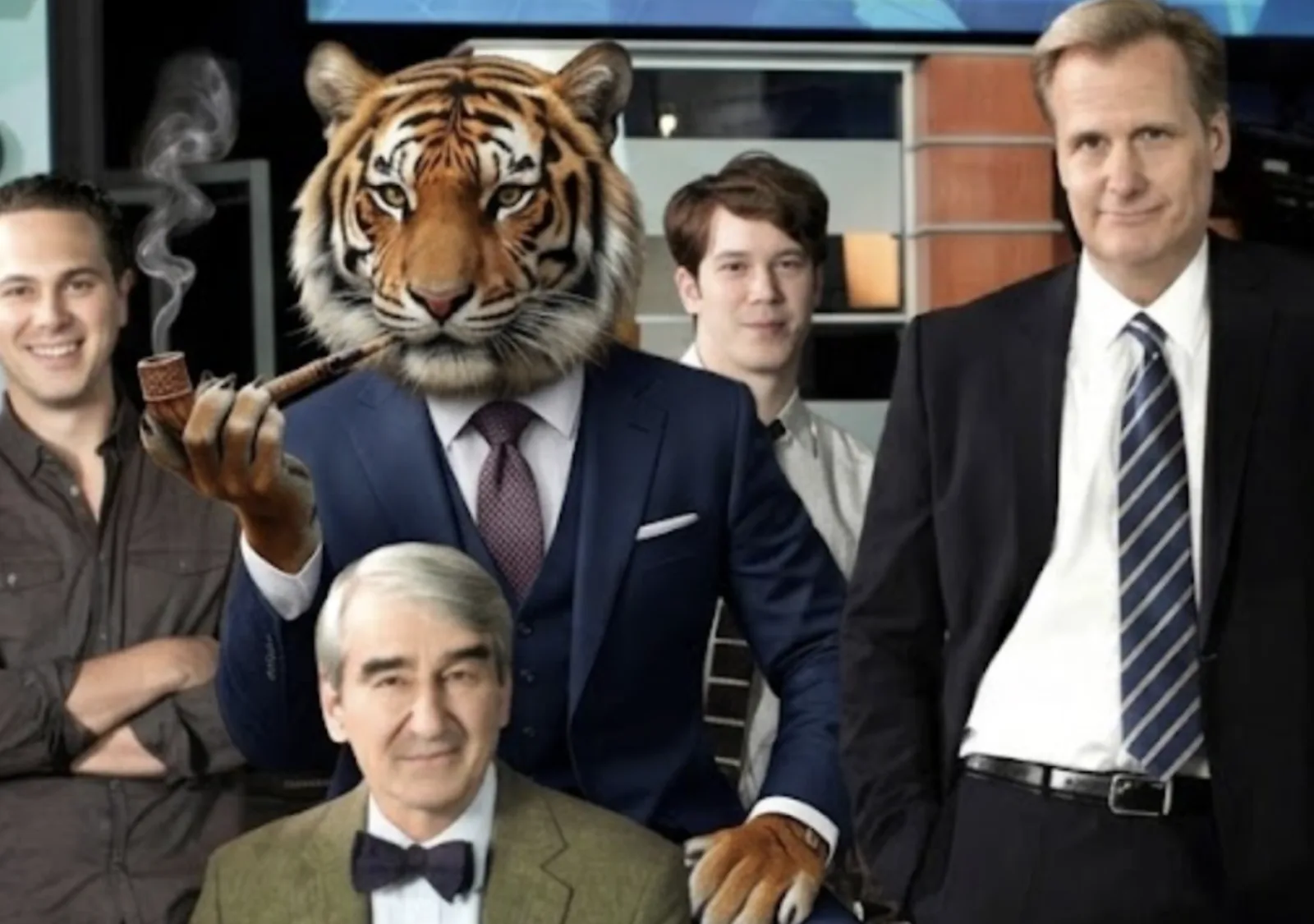
I've been rewatching The Newsroom, which, for a liberal progressive like me, is a little like an Aaron Sorkin sundae covered in all the “what if” schadenfreude and vindication toppings you can eat. By screenwriting the events of the recent past the show can cover real events already knowing how they turned out, so every night is the news as we wish we'd gotten it. We used to call that revisionist history, rewriting the record once the dust had settled. In 2026, it feels like the record gets revised while it's still warm, in real time, or sometimes before the real one shows up, as a revisionist present.
1. When You're Paying for the Advice
In October, KPMG published a report on agentic AI called “Redefining excellence in the age of agentic AI,” which is a fittingly excellent title for a document that turned out to be partly imaginary. It described UBS running AI agents across advisory and compliance, British rail and transit systems orchestrating travel by algorithm, the NHS triaging patients with tools nobody could locate — and much of it was hallucinated, case studies conjured by the very technology the report was busy praising. UBS called the claims about itself factually incorrect. KPMG pulled it down. The detail that should keep marketers up at night came from GPTZero, the outfit that caught it: the invented claims had already been quoted by industry press and a Czech newspaper before a single person checked, because nobody fact-checks a thing with KPMG on the cover. The lie rode in on the letterhead, the way a forged painting clears the loading dock because it arrived in the right crate.
Takeaway: We want the logo to mean rigor, so we believe the report without checking it.
(Sources: Financial Times; GPTZero)
2. When You Know You've Been Robbed
I am a big Knicks fan, which means I am ecstatic today.
But it meant that I spent part of last Monday night, after the one loss, believing I had witnessed a felony. After the Game 3 loss at MSG, a clip spread like wildfire of Spurs star Wembanyama shoving Jalen Brunson to the floor by the back of the head. The clip hit my feed within minutes, and the NBA later admitted the referees had in fact missed the foul, so 10MM fans' fury wasn't wrong, exactly. But what the clip also showed was Brunson getting a fistful of Wemby's jersey first — the half-second Instagram had thoughtfully trimmed off the front before serving it to a man whose loyalties the algorithm already had on file.
Even Brunson, asked about it in the presser afterward, declined to litigate: “whatever you saw is what you saw.” And now that the Knicks won the finals, the Game 3 issues are ancient history.
Takeaway: We want to have been robbed, so we believe the edited clip.
(Sources: ESPN; Field Level Media; Newsweek)
3. When You Need Something to Blame
Two of the most quoted men in American parenting teach at the same business school. Jonathan Haidt gave us The Anxious Generation, the argument that smartphones rewired childhood and broke our daughters first. His NYU colleague and friend Scott Galloway followed with Notes on Being a Man, the argument that our sons are the ones in freefall — one in seven with no close friends, three of every four deaths of despair, falling behind girls at nearly every rung of school. Same villain in both books: the algorithm that hollows out a kid's real life.
Stack them together and you get a forest canopy so complete it shades the entire generation, boys and girls, with no gap left in the leaves for daylight. Under cover that total, the careful voices barely register. The psychologist Candice Odgers used her review in Nature to warn that the story was running well ahead of the research, and she is right to worry, and she will lose anyway, because she is bringing a footnote to a folktale, and the folktale is the one that lets a frightened parent off the hook.
Full disclosure, I've read most of both books and I've also caught myself in airports watching a ten-year-old disappear into a screen, certain I was watching the end of something.
Takeaway: We want our children's pain to have one clear villain, so we believe the book that blames the phone.
(Sources: Jonathan Haidt, The Anxious Generation; Scott Galloway, Notes on Being a Man; Candice Odgers, Nature)
4. When You Already Want to Buy It
Amazon more or less invented the idea that a stranger's opinion belongs on a product page. It started in 1995, it scandalized publishers who assumed a store would never print bad news about its own shelves, and when an investor warned Bezos that negative reviews would cost him sales, he reportedly waved it off, telling the room that Amazon earns its keep “when we help customers make purchase decisions.” It was a genuinely radical act of trust.
Three decades on, that same trust is the most forged number in commerce: by Capital One's count, roughly thirty percent of online reviews are fake, nearly half of the ones caught are perfect five-star ratings, and the fakes multiply faster than the real ones while lifting sales by double digits in their first two weeks. We know all of this. Eighty-four percent of us, per Omnisend, say we trust the reviews anyway.
And on June 23rd, pulled forward from its usual July, Prime Day opens and the whole country lines up to obey a number it has already been told is salted.
Takeaway: We want what's already in our cart to be the right call, so we believe the rating that swears it is.
(Sources: Amazon; Capital One via Digital Commerce 360; Omnisend; Amazon Prime Day announcement)
This Week's Red Thread: "Revisionist Present"
In his definitive book, Never Split the Difference, Chris Voss, a former FBI hostage negotiator turned corporate consultant, says the most dangerous phrase in a negotiation is “you're right.” People know that it's meant to make you stop talking and it can infuriate the guy with the gun.
The phrase Voss advocates instead is “that's right”, which makes people feel completely understood. And that feeling, a way of placating the speaker disguised with objectivity, is what actually moves people to your side.
Each of the four signals this week have that element. For the right target, each of them has that “that's right” feeling, the warm little click of being seen and confirmed, and seems to ask for nothing in return. None of them force the thankless move that reveals what actually happened, which is to go hunting for the version that makes you question further, or worse, look wrong.
That hunt is all of our job now, and it's the hardest one. It is unflattering, it is uncompensated, and every tool we've built in 2026 is tuned and optimized to do the opposite and tuned beautifully.
We used to let time handle the revising because we trusted it would be revised correctly. You waited, the dust settled, the record got corrected and read back to you clean by someone at a news desk. But, unfortunately, Sorkin isn't writing the world around us. Will McAvoy isn't coming. (Neither are President Jed Bartlet or Andrew Shepherd from The West Wing and The American President, respectively.) And time isn't doing the job either, because the revising now happens at the speed of the feed, and it's optimized in our favor every time.
As of the writing of this, the Knicks are World Champions and Lewis Hamilton has just won his first F1 race for Ferrari. Not a lot of complaints with how those two things happened. So the only honest edit to remember as we move through 2026 and beyond is the one we have to perform against ourselves.
We can all seek comfort in our fictions as long as we interrogate our truths.
And that's the entire reason we still sign these the way we do, “100% written by humans.”
— NB