
SUNDAY SCARIES: The C_O (formerly known as CMO)
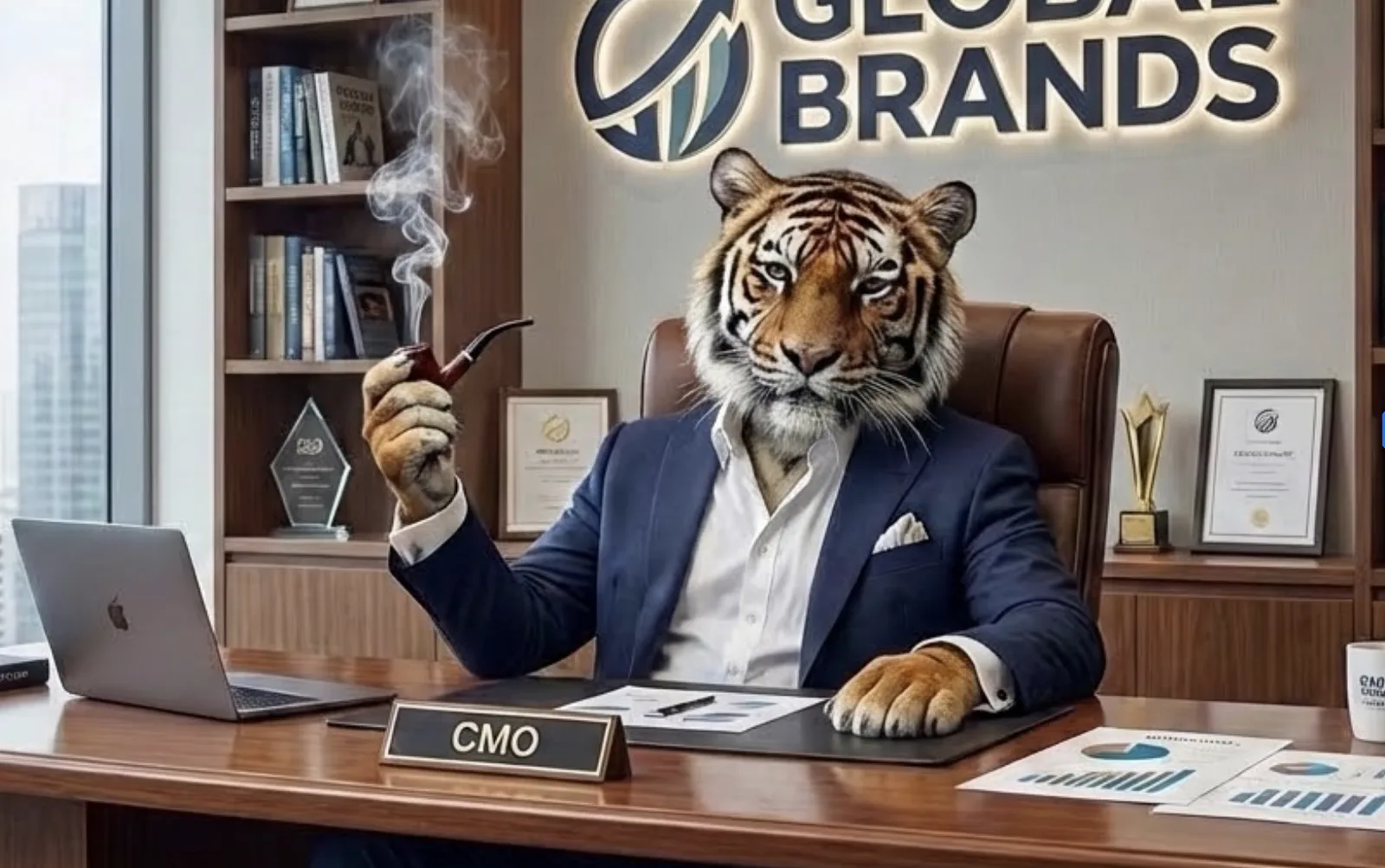
Recently I've been talking to CMOs and CCOs about the state of marketing leadership. I asked all of them the same opening question: what does your family think you do for a living? The most common answer, almost word for word: “Make commercials.”
If you work in marketing, this is the standard assumption; frequently the people closest to you have no idea what the job actually is. This week, we explore what this CMO job really means for those inside it.
1. The "Disappearance"
Forrester's study found that only 58% of Fortune 500 companies still have a marketing executive reporting directly to the CEO, down from 63% a year earlier. Just 49% of the top marketers at those companies even carry “CMO” in their title. UPS, Etsy, Walgreens, Starbucks — all eliminated or restructured the role in the last eighteen months.
Seventy percent of Fortune 100 CEOs come from operations or finance. Only 4% have ever held a CMO-like role. Which means many of those deciding the fate of their CMO might have roughly the same understanding of the job as your uncle at Thanksgiving.
No one just walks in off the street thinking they could be CFO of a company. But it's a sad truth that plenty in corporate America think they could be CMO. Some of those same folks now even hold the position.
No wonder the average CMO tenure is one of the shortest in the C-suite.
Takeaway: The role isn't being eliminated because marketing is failing. It's being eliminated by people who never understood what it did in the first place.
(Sources: Forrester, August 2025; Behind the CMO, "The CMO Is Dead. Long Live the CMO," December 2025)
2. The "Promotion"
Spencer Stuart studied CMO departures and found that two-thirds of them aren't being fired — they're making lateral moves or stepping into bigger roles. Ten percent are becoming CEOs. The title is shrinking and the humans who held it are going up, not out.
Korn Ferry published a study — discussed by my partner Terry Seitz on Friday — that profiled 30 of Europe's most effective consumer marketing leaders and found a consistent archetype: “part creative, part CFO, all change agent.”
I'd normally resist a consulting firm's attempt to rebrand a job I understand pretty well, but this matches the research and conversations I had as well. The CMOs getting promoted stopped describing their value in marketing language and started describing it in the language of whoever controlled their budget.
One CMO put it more simply: I asked if the four P's of a great CMO have evolved to be people, politics, persuasion, and planning, and she said I was missing the most important one: P&L.
Coca-Cola agrees. This quarter they expanded their CMO's remit to include customer and commercial leadership that previously sat under the CFO. This is the same company that killed the CMO title in 2017, replaced it with Chief Growth Officer, and reversed course two years later. One company's ceiling is another company's floor.
Takeaway: The title is a lagging indicator. The skill set is being promoted everywhere; it just may not say "marketing" on the door anymore.
(Sources: Spencer Stuart, "CMO Tenure 2026," January 2026; Korn Ferry, "Meet the Modern Marketer 2026"; Marketing Week, "Coca-Cola Expands CMO Remit," January 2026)
3. The "Squeeze"
“Brands are built in years and measured in quarters.” That's always been the CMO's tension. But right now both levers broke at the same time.
NIQ surveyed 250+ CMOs globally and found that CEO and CFO support for long-term brand investment dropped from 80% to 69% in a single year. Eleven points. That's not a trend, that's a pit of despair.
And the fallback — short-term performance — is getting more expensive by the quarter. Meta CPMs rose 20% year over year in 2025. Google CPCs rose across 87% of industries. Leadership is demanding short-term proof at the exact moment the cost of producing it is inflating and the ability to measure it is collapsing.
Korn Ferry found that only 35% of CMOs track revenue and margin as their top metrics, which would be fine except that's exactly what their CEOs are grading them on. As one CMO said to me, “it's like taking the SAT's in a language you don't speak.”
WARC and IPA data consistently show that distinctive creative assets double long-term profit growth. The math was always on marketing's side. They just had to learn to show it to people who don't read WARC — and to make the CFO more afraid of incrementalism than ambition. As Jon Evans has said, “the best CMOs make bold decisions seem reasonable and safe decisions seem expensive.”
Takeaway: The C-suite is pulling support from the one thing proven to double long-term profit growth while doubling down on the one thing getting more expensive and less measurable every quarter. The CMOs who survive are the ones who can explain that sentence to a room full of finance people.
(Sources: NIQ, "CMO Outlook: Guide to 2026," November 2025; Korn Ferry, 2026; WARC / System1 / IPA; Uncensored CMO, J. Evans)
4. The "Blind Spot"
There's a positive headline buried in the Spencer Stuart data: S&P 500 CMOs are now 50% women, up 12 percentage points since 2020. That's real progress and it deserves to be celebrated.
But underneath it is another statistic that's not worth celebrating: executives from historically underrepresented racial and ethnic groups make up just 9% of S&P 500 CMOs. In the rest of the C-suite, that number is 12%.
Read that again; the most consumer-centric role in the building — the one job whose entire purpose is to understand what people want and how they feel — is less racially diverse than the C-suite average. And the number hasn't moved recently.
The gender progress makes the headline look good. But if you're a company that just handed the CMO's responsibilities to your COO or your Chief Revenue Officer, ask yourself whether that made the representation problem better or worse.
Takeaway: The seat most responsible for understanding the consumer is the least reflective of them. In a world where feeling what your customer feels is the one competitive advantage a machine can't replicate, that's not just an equity gap. It's a strategy gap.
(Sources: Spencer Stuart, January 2026; Marketing Charts, February 2026)
This Week's Red Thread: The New CMO
Last week I wrote about the Invisible Shelf — AI agents creating a layer of product discovery that nobody can see or touch. A few people DM'd me about what that means for the humans running the brands. I think this week is the answer.
(1) The CMO title is dissolving and (2) Agentic shopping is the future. Yes. But the actual work of making people give a damn about your brand has never mattered more.
As Kaare Wesnaes, head of innovation at Ogilvy NA, said: ‘the head will automate quickly, the heart will take longer.’
The categories where the heart drives the purchase — beauty, food, fashion, the stuff that's tangled up in identity and taste — those are the last ones the machines will fully own. And those are exactly the categories where brand investment is being cut the fastest, because the C-suite can't see the ROI on a quarterly dashboard.
Meanwhile, the people sitting in the seat are less reflective of the consumers they're supposed to feel for than the rest of the leadership team. When feeling is the last advantage you've got, who's in the room isn't about some diversity initiative — it's about making better business decisions.
So my conversations netted out a strange inversion: The companies killing the CMO role are probably the ones that most need someone thinking about what a brand feels like, because that's the one thing an AI agent can't evaluate on its own. And some of the CMOs who got promoted are the ones who quietly figured out how to hold both — the machine-readable and the deeply human — without waiting for someone to write them a job description for it.
But there was consistency throughout: They all loved their brands. They were all energized by the future. And they were all exhausted by the job.
I asked each person I interviewed to rewrite the CMO job description from scratch. And this was my favorite:
“Set the vision, create the change, inspire the team, hit the numbers, learn, try, fail, grow. Rinse repeat, this time faster.”
I've never seen that quote on a poster before, but maybe everyone in the C-suite should have that written on their wall.
— NB