SUNDAY SCARIES: Stamps of Approval
There’s a classic scene in the movie Tommy Boy in which Chris Farley is bungling another sales meeting until he finally figures out how to get through to a stone-faced auto parts dealer. As the dealer only cares about having a guarantee on the box, Farley reframes the idiocy of guaranteeing a lesser product by saying, “If you want me to take a dump in a box and mark it guaranteed, I will. I’ve got spare time.”
This week, four stamps said very different things than intended by those who put the proverbial stamps on the boxes.
1. Designer Cover Story
The Met announced in late July that its spring 2027 Costume Institute show will be John Galliano: Horizons. That means Galliano becomes only the third living designer to get a solo show there, after Saint Laurent in 1983 and Rei Kawakubo in 2017.
You don’t need to follow fashion to know that John Galliano is a controversial choice. Even the press release detailed his antisemitic, racist and anti-Asian remarks across 2010 and 2011, his dismissal from Dior, and his conviction in a Paris court. The Met claims the show “will consider how artistic achievement should be understood alongside ethical accountability”, and they have been careful to say this isn't about redemption.
But the debate around The Met show is a lot of intellectual smoke around something that should be more clear: despite claiming it’s not making a decision about Galliano’s legacy, a show that holds achievement and accountability together has taken away the choice entirely. As soon as the public buys the ticket and walks the galleries, his legacy has been redeemed.
And someone already gave Galliano that lifeline. Zara signed Galliano to a two-year partnership in March and the first collection comes out next month. In other words, a company built on cheap and forgettable handed a notoriously and justifiably canceled artist a comeback ticket.
Takeaway: The museum claims an impartial cover story, but the actions that are in motion give away the tacit approval.
(Sources: The Met, July 31 2026; Financial Times, August 6 2026; The Hollywood Reporter)
2. Mislabeled Protection
The creator Ashton McGrady spent many hours making a digital collage for Disability Pride Month. But then TikTok stamped it AI-generated, leaving Ashton to scramble for answers. (TikTok pulled the label later without explanation).
Creator Gregory Littly posts scans of physical Polaroids and now Instagram forcibly warns his followers the “content may have been modified with AI”.
Ideally, these tools would help separate great content from slop. But the tools are so clearly flawed that Instagram's own font tool triggers it, same with Lightroom and Canva.
But AI is a big part of creating. Adobe and Harris surveyed 16,000 creators in May and more than seventy-five percent say that AI is integrated or essential to how they work. Seventy-five percent also say their audience can already tell. So if the audience can tell, the label is decoration for whoever would otherwise have to look at a Polaroid and make up their mind.
Now brands have written the same reflex into their contracts with these creators. I’m no defender of creators, but talent managers told Business Insider that aggressive no-AI clauses are turning up in briefs, itemized: scriptwriting, captions, edits. Creators are even being advised to negotiate mutual morality clauses in return, so they have some counter-leverage to determine whether the company that’s paying is decent.
Takeaway: A no-AI label and clause are a preemptive accusation against creators that doesn’t protect consumers.
(Sources: Business Insider, August 2026; Adobe/Harris Poll, June 16 2026; Fast Company)
3. Redundant Verdict
Last Thursday a New Mexico judge ordered Meta to pay $567 million into an abatement fund, on top of the $375 million a jury assessed in March. He found the platforms a public nuisance. Since Meta cleared about $60 billion in profit last year, the finance team isn’t sweating too hard and the stock moved less than half a percent.
But the remedies are what should carry: users under 18 in New Mexico are now capped at ninety hours a month across Facebook and Instagram. Notifications must be off overnight and during school hours. And like counts hidden by default unless a parent turns them on.
I agree with every single change. But they’re all so out of step with the apps themselves that the phrase “Ok boomer” leaps to mind. When Attorney General Raúl Torrez called the ruling a blueprint and said other states now have a roadmap, you could literally hear the teenagers’ eyes rolling across the country.
Most of those “new changes” have been available since 2021, in a parental controls panel next to Apple's Screen Time, which was released in 2018. But maybe court-ordered defaults will protect more kids in New Mexico than a decade of optional ones managed.
Takeaway: The rules and tools were there, but it took a court order to give parents cover to use them.
(Sources: Associated Press, August 6–7 2026; PBS NewsHour; CNBC)
4. Sticker Shock
This week, Ford gave its cheap electric pickup a name: the Fathom. The Fathom is $28,350 before a $1,595 destination charge, built in Louisville on a platform Ford is calling its Model T moment, (due to having twenty percent fewer parts and forty percent fewer workstations).
The average new vehicle in America sells for $51,394 and the F-150 Lightning Pro, which Ford killed in December, started around $49,780.
Nobody at Ford ever sat down and decided a truck should cost that much. But the more the F-150 was bought by everyone, the more it needed to BE everything to everyone. That’s how things get expensive when the data leads. Every new feature and trim upgrade was justified by what question it answered. But the aggregate outcome is that the company that motorized the American working class engineered itself out of reach of the American working class.
Slate Auto started from the other end. Their premise is that cars get built for the top thirty percent, so they'd build for the other seventy. Slate trucks start at $24,950 which means a Bezos-backed company with no sales history got there first and cheaper.
Takeaway: The Fathom at $28,350 is Ford paying a nineteen and a half billion dollar EV writedown to learn something that Slate learned for free.
(Sources: CNBC, August 6 2026; Yahoo Finance; The Autopian)
This Week's Red Thread: Stamps of Approval
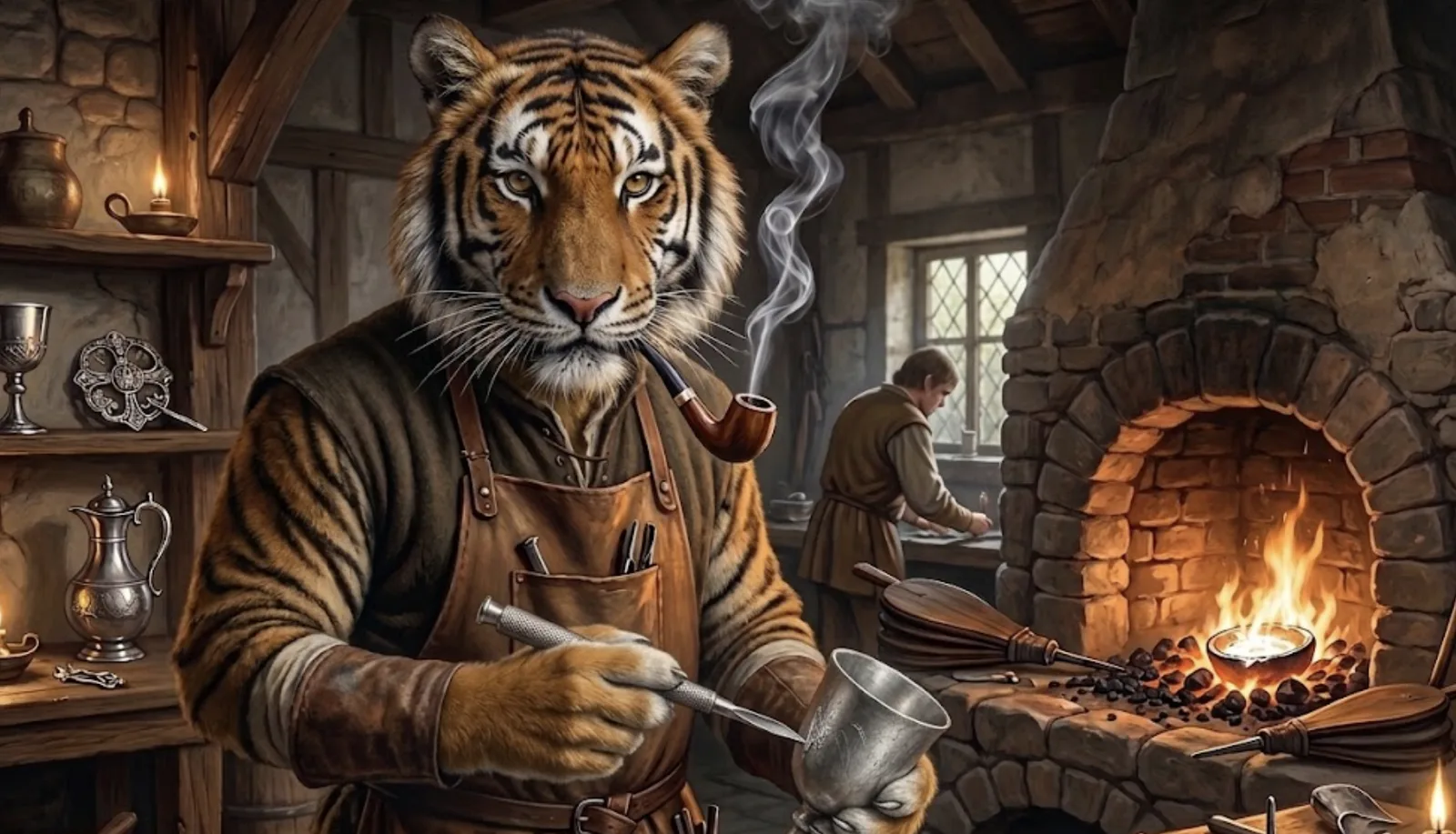
In 1300, Edward I set a standard for English silver and sent the four wardens of the Goldsmiths' Company from shop to shop throughout London to test the silver. Anything that passed got the King's mark. Anything that failed was forfeit to the crown. (The test was a win-win for Edward I)
By 1478 there were several hundred workshops in the City and four men couldn't walk them all, so the silver was brought to the Goldsmiths' hall instead, (which is where we get the word “hallmark”, or the mark of the hall).
The company put a salaried assayer at a furnace with the Touch Warden watching, which made the company itself liable for the fines when something below standard went out stamped. But that changed the mark, as it meant the man at a furnace with a job to lose was the actual guarantee of the work. The mark just told you he’d done it.
The stamps in this week's edition are assertions without that guy at the furnace:
The Met is using a PR phrase to merge achievement and accountability together without having to stand behind their choice.
Labels and No-AI clauses spare the platforms and brands from making an accusation they would have to own.
A judge in Santa Fe had to become the parent because the parental controls needed a parent willing to be the bad guy.
And Ford's trucks priced themselves out by having those decisions made by everyone and no one.
In marketing, we literally sell marks for a living. That is the business. A brand is a stamp that lets a person buy without evaluating. Trust is a flattering word for it. Relief is the honest one. And despite the Tommy Boy scene, that relief is also fine, right up until the box in your hand starts to stink. That’s when you turn to the guy by the furnace for a real guarantee.
I keep “100% written by humans” at the bottom of these. Though I worry it proves nothing, since anyone can strike a mark and the AI tools are bound to wrongfully label my writing sooner or later. At the very least, what it does is put my name next to the metal, so that if I've handed you a bad spoon, you know exactly whose furnace it came out of.
— NB
P.S. Shameless plug for the Clarity Gap in our Nuance Index