
SUNDAY SCARIES: Pirate Rules
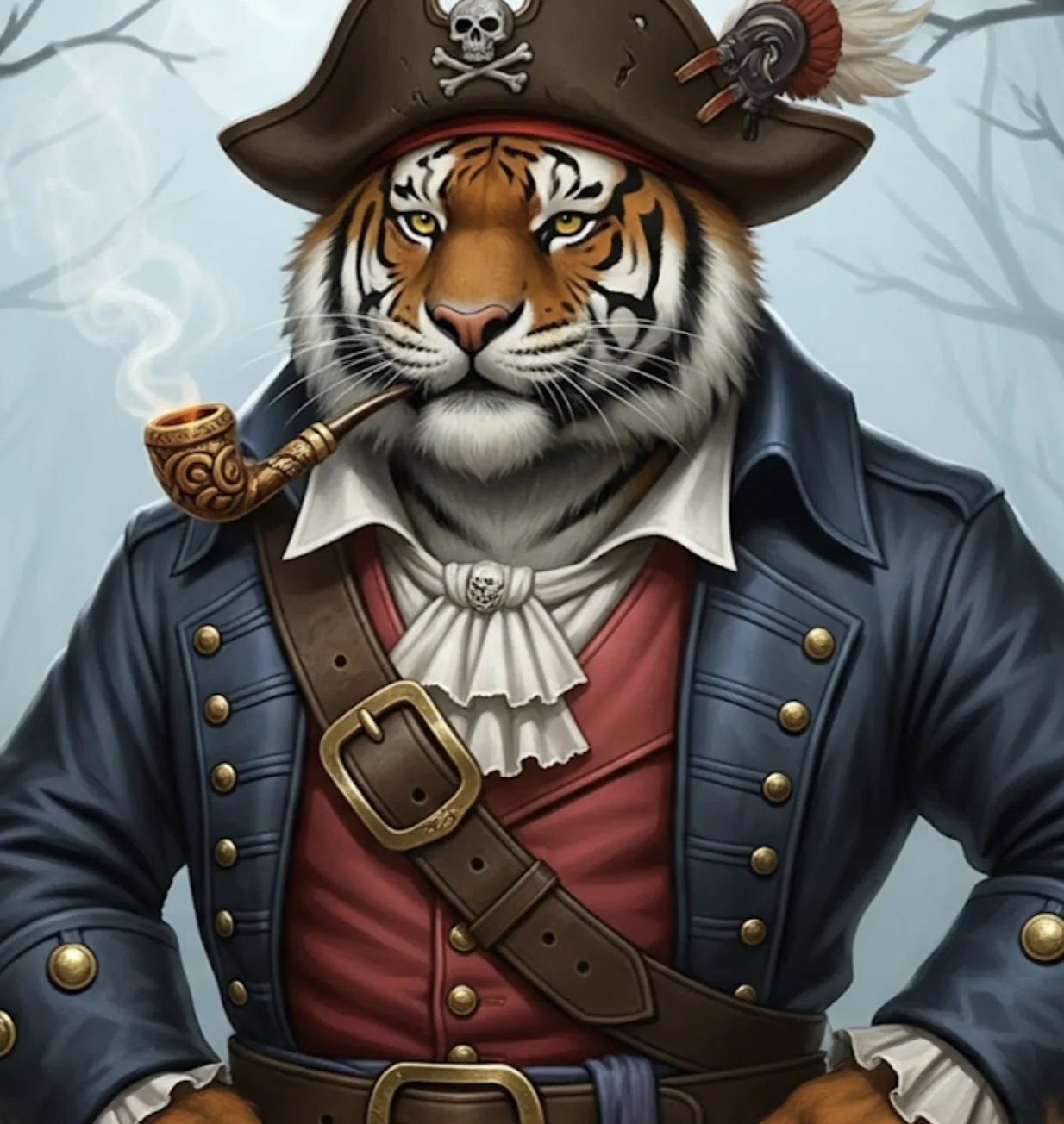
This week is an homage to Rob Schwartz's Pirate Rules.
1. Rich People Will Rich Right
We've reached a strange cultural détente where wealth has stopped apologizing for itself and started performing discernment. TikTok's “rich people who rich right” isn't really about affluence... it's about fluence(y): the right Kyoto tea set on a bookshelf, the right wabi-sabi retreat in Puglia, the right candle that smells faintly of Henry Jacques and Protestant guilt. The flex is in the editing, not the expense.
Wealth used to whisper. Now it hums in cinematic color grading. And the fascination isn't just envy anymore — it's admiration for how seamlessly some people turn privilege into palette. Taste has become a survival skill in an algorithmic world where money can't buy originality, only editing.
Pirate Rule: Aspiration has shifted from "I want what they have" to "I understand what they mean." Subtlety is no longer quiet; it's curated. And in 2025, taste is the last true form of class mobility.
(Sources: Dentsu Weekly; The Cut; Business of Fashion)
2. The Gaping Attention Gap
Every marketer knows it but few admit it: we're drowning in content no one actually sees. A new WARC × Newsworks × Lumen study shows high-attention media drives nearly 90% more profit, yet most media plans still optimize for digital wallpaper. Attention has become both the rarest resource and the most squandered. As Amplified Intelligence calls it, “dullness is the hidden tax on creativity.” Under the banner of efficiency, we've traded resonance for reach and built a trillion-dollar industry on invisible impressions.
Pirate Rule: Attention isn't something you buy; it's something you earn with emotion, craft, and time. The age of frictionless efficiency has created a market where human notice is the only remaining scarcity.
(Sources: WARC / Newsworks 2025; Amplified Intelligence white paper; Campaign UK)
3. AI Companions and the Failure of Friction
Scott Galloway spent a year building an AI twin and killed it after less than an hour. His clone could answer questions, offer advice, even empathize — but empathy without resistance isn't empathy; it's flattery. Meanwhile, AI companions like Character.ai and Replika now engage over a billion users. Generative AI isn't stealing your job, it's stealing your loved ones. We've turned loneliness into a brand new profit engine. Algorithms have learned to soothe without ever caring, and to sell comfort one sentence at a time. As Stanford researchers warned, “Companies have put profits before kids' well-being before — we cannot make the same mistake with AI companions.”
Pirate Rule: Real connection requires tension. The friction we keep trying to erase is the only thing that makes us real.
(Sources: Prof G Newsletter; The New York Times; Stanford/Common Sense Media Report 2025)
4. Creative Maximalism — Ripe for a Coup de Taste
Minimalism died of its own success. The beige calm of the 2010s has given way to a hyperactive feed pulsing with movement, noise, and joy. This new Creative Maximalism is what happens when creators reclaim excess as art — a riot of typography, motion, and meme. But chaos alone isn't culture. As the rarely wrong Tom Goodwin wrote this week, we're “swamping the world with AI content” and mistaking abundance for achievement. Meaning still needs friction. Craft still needs time. And taste — the rarest resource in the modern feed — requires restraint.
Pirate Rule: Creative evolution is neither speed nor scale; it's discernment. Rebellion against AI abundance is in the details.
(Sources: Dentsu Creative Report 2025; Fast Company; Tom Goodwin LinkedIn)
This Week's Red Pirate Thread
The legendary creative leader, Rob Schwartz, retired from TBWA\Chiat\Day at the end of September. His farewell essay — a collection of sharp, deceptively simple adages he called Pirate Rules — quietly summed up what the industry keeps forgetting: show up, listen, make the complicated simple, and make the simple simply amazing.
Every signal this week proves why that philosophy still wins: The rich who “rich right” aren't flaunting more — they're editing better. High-attention media isn't about louder ads — it's about clarity that earns notice. AI companions fail because they can't listen. And Maximalism only works when someone curates the chaos.
Rob's career proved that rebellion doesn't need volume, it needs understanding. Clarity before poetry. Simplicity before spectacle.
Pirate Rule: In a world optimized for more, the only real edge is Nuance.
— NB