
SUNDAY SCARIES: Now What?
Today is the summer solstice, the peak of sunlight making it the longest day of the year. But a sports columnist would probably say it's the first day of the sunlight 'getting less and less and not living up to the peak of June 21st'. After the end of the Knicks' 53 year drought unified an entire city and caused more than a few adults, including myself, to weep, those same commentators all started to ask this week's question: NOW WHAT?
1. The Title
For fifty-three years, being a Knicks fan was an ache shared by millions and handed down like an heirloom. Then they won in truly epic fashion, clawing back from double-digit deficits in all five games of the Finals, and for about three days the city was the warmest it has been in my memory. Thursday brought the first ticker-tape parade in franchise history, since the 1970 and 1973 champions never got one. Walking around the West side on Thursday night, strangers were cheering across the street and everyone in any type of Knicks gear high-fived each other.
Yet Friday brought Instagram videos of kids hanging on lamp poles and the new expectation: Now Do It Again. The hunger fifty-three years built did not evaporate at the buzzer; it started hunting a new target, and the only target left is a repeat that can never feel the way this one did.
Takeaway: Congratulations, Knicks, the city's devotion and unity will now curdle into the expectant guilt usually reserved for the counter at Zabar's.
(Sources: ESPN; NBA.com; Wikipedia)
2. The Record
On May 6, 1954, British runner Roger Bannister ran a mile in three minutes and fifty-nine and four-tenths seconds, cracking a barrier that more than a few people actually believed lay beyond the limits of the human body. The Brits sat back and marveled at the monumental achievement for forty-six days until the record was broken again.
On June 21st of that year — seventy-two years ago today — a modest Australian named John Landy ran 3:57.9 in Turku, Finland, a second and a half quicker, and suddenly the impossible line became an ordinary line that everyone else was going to reach.
More than two thousand men have since gone under four minutes. Meanwhile, Bannister went on to become a neurologist and when he passed away in 2018, his miracle had been reclassified as more of a minimum.
Takeaway: Here's to Roger, whose forty-six days as a god now belong to every NCAA runner who'll treat your miracle as a training bar.
(Sources: World Athletics; NBC Sports; Four-minute mile, Wikipedia)
3. The Monument
Last week, on a hillside at Bulford a few miles from Stonehenge, archaeologists revealed two ordinary-looking postholes that turned out to be the remains of wooden poles set 120 metres apart and aimed directly at the solstice sunrise. They were radiocarbon-dated to around 5,000 years ago, which makes them the earliest solstice alignment in the whole landscape, some 500 years before the famous stones were raised.
That's not a small difference, as it means people were marking the exact sunrise on a nearby hill half a millennium before Stonehenge existed, which theoretically demotes the most iconic monument on earth from the original to the nice little stone upgrade. (Adding insult to injury, the archaeologists suspect a rougher prototype once stood at Stonehenge itself, before later work erased it.)
But the job was never to help the fun-loving folks of Britain throw a party at the height of summer. Archaeologists believe the poles were set to catch the precise moment the longest day tips toward midwinter's dark, so the community standing in sunlight could see the cold was coming and they needed to get back to the work of keeping their muddy lives possible.
Takeaway: Sorry, Stonehenge, you had five thousand years as humanity's origin story, but you've been upstaged by a pair of postholes down the road.
(Sources: Wessex Archaeology; Live Science; Euronews)
4. The Lion
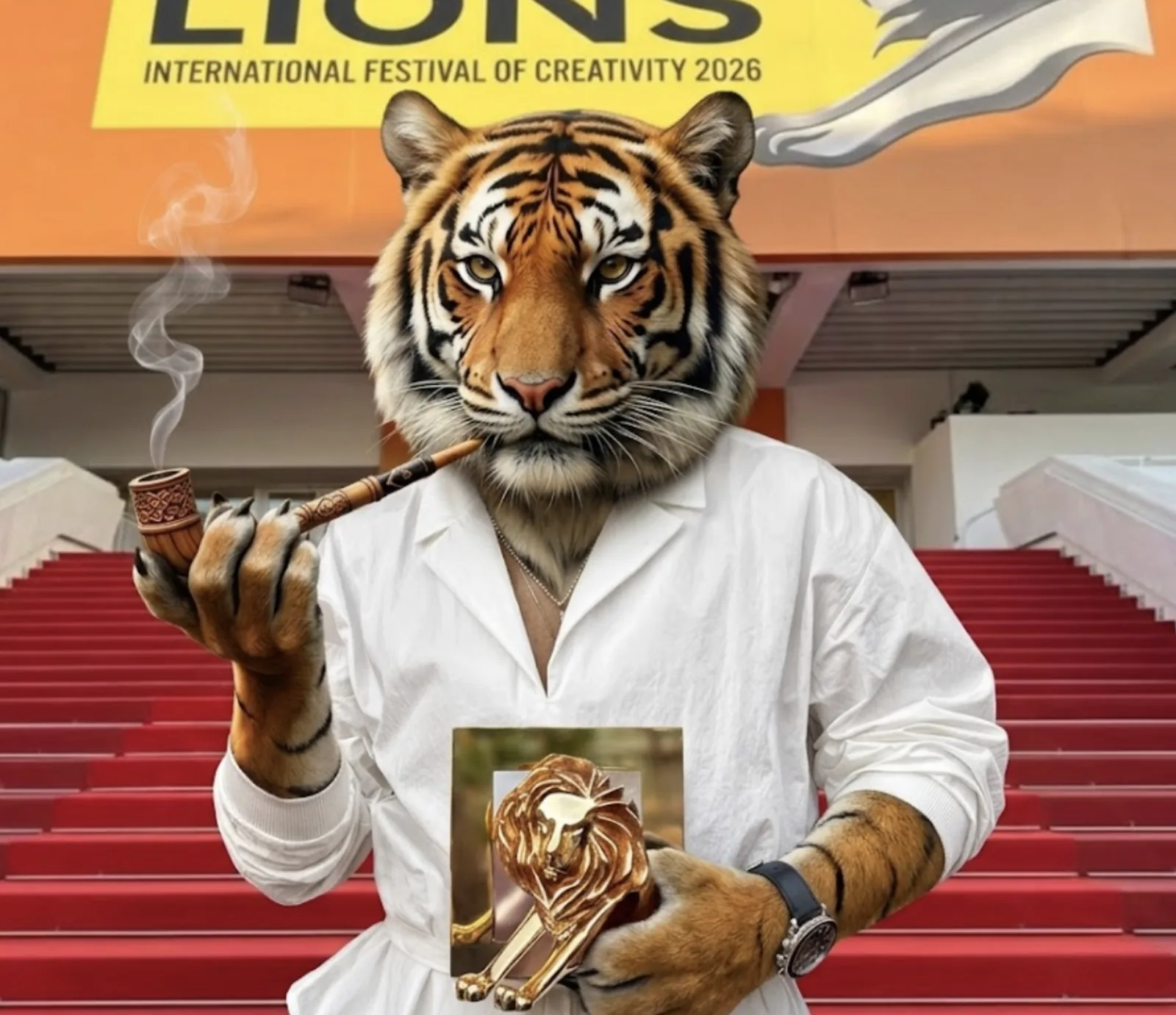
Starting tomorrow, the new 1% of the advertising industry will strut around the south of France for the Cannes Lions Festival of Creativity. After AI infestation tainted the integrity of countless entries last year, the awards are under more scrutiny than any edition in the festival's history. Add to that the very real “pay to play” element of charging agencies $3,000 for individual entries, there is a lot of evidence to challenge whether this is truly the best work in the world or just the best from the richest agency networks with expense accounts to accept the awards in person.
All of that aside, hundreds of genuinely gifted people will learn whether the work they bled over a year ago has been judged among the best on earth. And that is worth a huge amount of celebration.
Having had the honor of winning a couple of Lions myself, I can attest that seeing your own name is not something to be cool about — it is a knee-buckling, call-your-mom joy, and anyone who tells you that winning one isn't hugely important has either never come close to one or is lying to spare themselves the ache of wanting.
But that's what makes the days, weeks, and months afterwards so disorienting: on one day, the trophy is the proof of your career. When you get home to your office in New York, London, Tokyo, Jakarta, Sydney, it has already been folded into next year's expectations. Whether it's said out loud is irrelevant, “What's next” is ringing in your ears.
Takeaway: Enjoy the stage and the rose, because the work you're holding on the croisette just became what will be expected next June.
(Sources: Cannes Lions; BestMediaInfo; Contagious; AdAge)
This Week's Red Thread: What Next
The honest answer to what next is not printed on any foam fingers: back to the work.
The trophy, the banner, the record, are the visible parts, and the visible parts reset to zero by morning when the scoreboard always gets wiped overnight. What does not reset is the practice underneath, the part no jury sees and no rival can take.
John Landy showed what that looks like. While an entire sport stood hypnotized by four minutes as though it were a locked door, he kept saying he didn't much care about the number — he wanted to run the fastest mile he honestly had in him, and the world record fell out of the loving, not the chasing. Brunson said the same thing in fewer syllables all season: the only game that mattered was the next one, and he wouldn't let himself feel a thing until there were no next ones left to play.
According to the historical theologian Tertullian, the Romans built that lesson into their parades. When a general was paraded through the city in his triumph, a slave rode behind him holding a crown above his head and murmuring, “respice post te, hominem te memento” — look behind you, remember you are a human. A thumb on the ego at its highest.
Hear it the other way: tomorrow he is a human again, like everyone else, and his job is to get up and do the work. The whisper isn't promising him the fall. It's reminding him he gets to go back to the thing he actually loves, now that the parade has to end.
And here's where history's sense of humor comes to bear: That August, Bannister and Landy finally met at the Empire Games in Vancouver. Landy led the whole way until the final bend, when he turned to look back over his left shoulder like Orpheus in the Greek myth, and Bannister went past him on the right. The photograph of that half-second during the “Miracle Mile”, of Landy looking to his left and Bannister passing him on his right, became an incredibly famous image and the subject of multiple statues.
Looking back is the wisest thing you can do in a parade and the most expensive thing you can do in a race, and most of the job — in marketing, in an NBA season, in life — is knowing which one you're standing in this morning.
Because the feeling doesn't last. Celebration is fleeting. The work is the only thing that the next morning can't take back, which is why the people who go on winning are the ones who stopped running for trophies and let the winning find them.
We love the work at The Nuance Collective, which is the whole reason our own “what next” always gets asked with a smile.
— NB