SUNDAY SCARIES: Marathon Curb Appeal
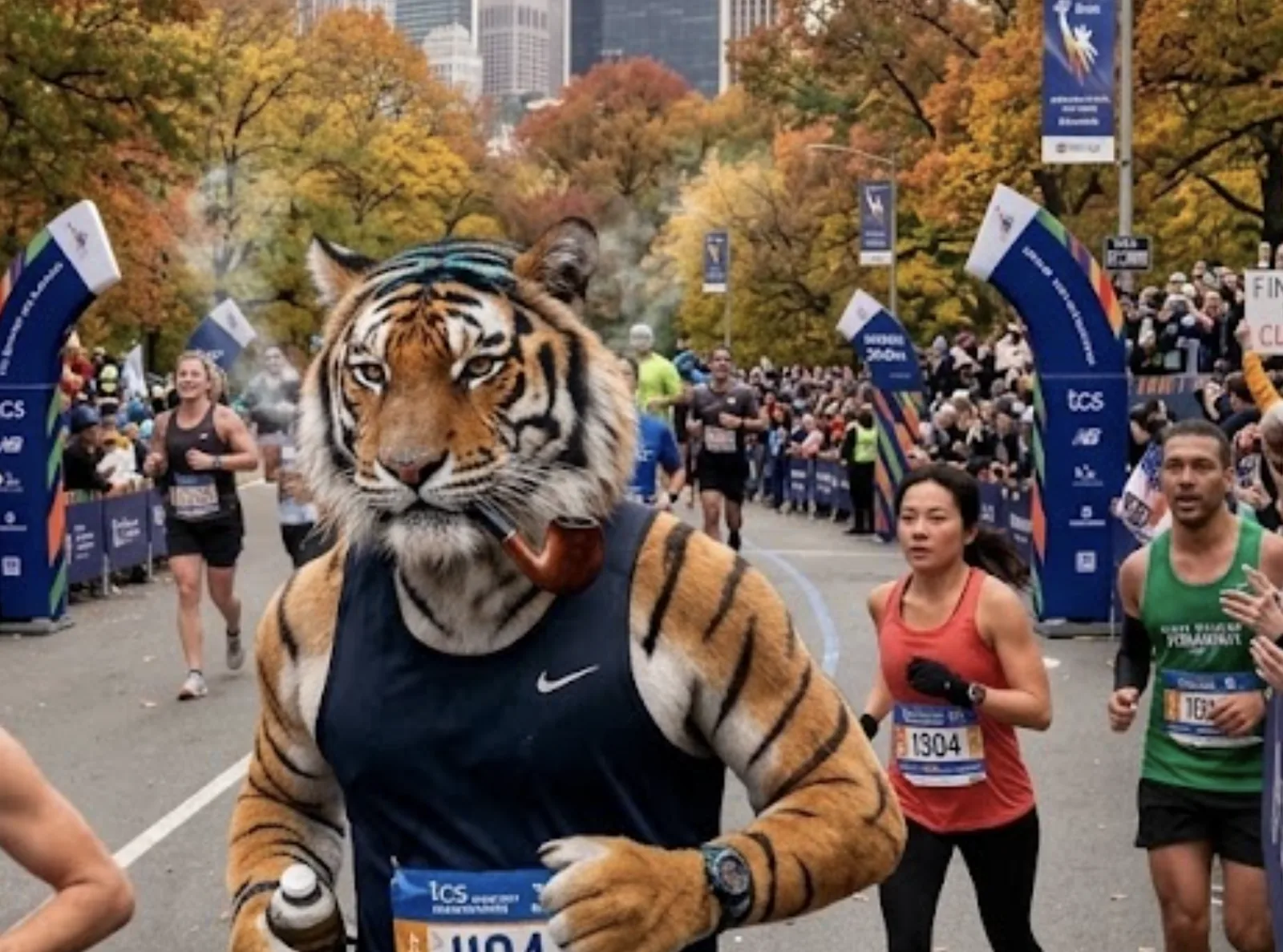
Marathon Sunday in NYC is an incredible experience. I would argue that it’s the most unifying yearly event on the calendar (which excludes the Knicks winning the NBA championship, unless it becomes a yearly event:).
But it had meager beginnings, far from the global event it is today. The marathon was founded by a Holocaust survivor named Fred Lebow and on September 13, 1970, 127 people paid a dollar each to run a little over four laps of Central Park. Only 55 of them finished.
This morning, nearly 60,000 people will start on Staten Island, and two million more will line the sidewalks to cheer them on. And the day in total, from the origins to Kenyan dominance, to the brands clamoring to join in, is informative about loyalty, about empathy, and about our universal connections.
1. A Gift From the Candy Companies
The clocks “fell” back at two o’clock this morning, so the nearly sixty thousand runners with a ferry or a bus to catch before dawn got an extra hour in bed. But they probably don’t realize that they have the candy and charcoal lobbies to thank for it. I’m not here to litigate daylight saving, but the idea of when to change the time is just too bizarre to leave untouched.
For most of its history daylight saving has been pushed by businesses that make their money in the evening, according to Michael Downing, who literally wrote the book on it. At the 1985 hearings on extending it, candy makers left candy pumpkins on the committee’s chairs, hoping for daylight on the sidewalks at the end of October, and in 1986 the BBQ industry told Congress an extra month of it would sell another $100 million in grills and charcoal briquettes.
Congress was persuaded and changed the spring switch up to the first Sunday in April, starting in 1987 so BBQ season could start earlier. Then in 2005 Congress moved the end of daylight saving to the first Sunday in November, and since 2007 the extra hour has landed the night before the race, (which, not by accident, finally put Halloween inside daylight saving).
Takeaway: The people who sell candy and BBQ charcoal spent years lobbying for an extra hour of daylight, having no idea it would give NYC Marathon runners an extra hour of sleep.
(Sources: NPR, Michael Downing; WNYC; Public Law 99-359, July 8, 1986; Wikipedia)
2. No Banners on Barricades
In September, New York Road Runners sent the run clubs its race-day rules, which dictate that brands who don’t sponsor the marathon are kept out of the clubs’ cheer zones, banners stay off the barricades and the buildings beside them, and no club zone can get in the way of a space NYRR has already given to a sponsor.
The fruity stimulant, Celsius, ran a cheer zone on Bedford Avenue last year and isn’t a partner this year, so it opened its own pop-up along the Brooklyn route. Vuori put a branded newsstand with cheer signs on the route in Williamsburg.
But nobody cheers based on brands or sponsors or teams or any other allegiance other than the human one. You have the legions of the great untapped copywriters who write signs that beat most campaigns I’ve ever been a part of. Something inspires people who are not creative 364 days a year to write, “Run like your ex is behind you” or my favorite, “Finish strong! DiCaprio would have stopped at 25!”
But the most effective branding on the course is on the runners. Watch any stretch of it today and you’ll see runners with their first names across their chests in marker or tape, so that strangers on the sidewalk can cheer them, which they do, for 26 miles. They yell out the names like they’re their biggest fans, in the most wonderfully illogical version of loyalty in sports.
Takeaway: NYRR rents the real estate along the course to brands, but the best name recognition is the strangers screaming the names of runners they don’t know.
(Sources: Marathon Handbook, September 30, 2026; Modern Retail, October 29, 2026; Marketing Brew; NPR)
3. The Other 99%
More than 240,000 people applied for this year’s drawing, a record, and about one percent of them got in that way. Most of the other ways in have to be earned through running sanctioned events with the New York Road Runners. NYRR’s 9+1 program gives guaranteed entry to members who run nine of its races and volunteer at one in a calendar year, which became so popular in itself that this fall NYRR started making members win a drawing just to attempt it.
Groups that send volunteers earn entries too, one for every twenty people who check in, and in 2025 more than 22,000 volunteers gave NYRR over 112,000 hours. Another 14,000 runners raised $80 million for charity last year to get their bibs. And the members of those run clubs who don’t get in become the city’s fan sections. Running clubs on Strava grew three and a half times in 2025, and in Strava’s 2024 survey one in five respondents had been on a date with someone they met at one. We Run Uptown, a Washington Heights crew that started in 2013, runs a cheer zone at mile 21 that’s regarded as one of the best at any major marathon, and Boogie Down Bronx Runners has run its own at mile 20.
Combine that with the winning payouts, and you see how odd this whole thing is: first-place finishers will earn $100,000, second-place will get $60,000, third-place $40,000, and fourth-place $25,000, all the way down to $2,000 for tenth. Athletes can also get a $50,000 bonus if they break the course record. (Amazing, compared to people paying hundreds for a ticket to watch NFL players who make $20 Million a year).
And it means the people there on Sunday are passionate runners and passionate fans, which makes them the most tantalizing for brands. If you were creating the perfect runner consumer, they’d be right here. That’s why NIKE, which isn’t a sponsor, pays for cheer zones with four of these clubs, and the official sponsor, New Balance, lists eleven in its own race-day guide.
Takeaway: 240,000 people wanted a bib and only one percent got one, which makes some of the most diehard runners and consumers very easy to find on Sunday.
(Sources: NYRR; Marathon Handbook; NYC News Network; Strava Year in Sport 2025; Fortune; Runners of NYC, October 30, 2026; The Athletic)
4. NIKE’s Ethos in Practice
The elite runners will all be finished by late morning, but the last wave doesn’t even leave Staten Island until around 11:30am, and NYRR records official finish times until ten o’clock tonight, so plenty of people will run their last miles long after the 4:53 sunset. Most of the cheer zones will pack up before then. The Bronx Burners run from ten to two, the Downtown Brooklyn Partnership’s zone from nine to one-thirty, and New Balance’s near the southeast corner of Central Park until four. But NIKE stays later.
NIKE has an ethos as a brand, which comes from a co-founder named Bill Bowerman, that means it would be disingenuous for them to leave in the afternoon. According to that ethos, NIKE is as much about the elite runners as those with mile times over 15 minutes: IF YOU HAVE A BODY, YOU’RE AN ATHLETE.
So their last cheering zone runs on a different clock. It’s with LostBoys track club, a downtown club best known for the summer of 2017, when its members got together on a Lower East Side track and relayed a marathon in under two hours. That zone opens at 7PM tonight at mile 25.8 on West 59th Street, less than half a mile from the finish, to welcome home the last finishers, who are all very much athletes — no matter when they cross the finish line.
Takeaway: After the elite runners are through, the crowds thin out, and that’s when NIKE digs in for more, just when non-elite runners need it most.
(Sources: Marathon Handbook; NIKE; Brooklyn Paper; Marathon-Weekend; Confluence Running)
This Week’s Red Thread: People Cheering People
My wife and I have made a tradition of watching the marathon from roughly the same spot for a few years now. We go inside the park on the west side, just north of Columbus Circle, where the runners have less than a mile left. We stand shoulder to shoulder with a few hundred strangers, and all of us spend hours yelling names we’re reading off the shirts of people we will never see again.
By the time we see them from our spot, the runners have covered more than 25 miles and some are cruising, elite runners businesslike in their finishing. Some get a jolt of final adrenaline and speed up, some get silly and let loose a bit.
But as the time ticks on, it’s less elite runners and more regular people runners who are putting their bodies through something bigger than ever. My wife and I have run several HALF marathons and that’s plenty hard. So you can spot the ones who most need your help. There are those whose legs are turning into mashed potatoes, those whose bodies are beginning to fight back in unexpected ways, and those who are simply in visible agony.
That’s when the crowds cheer loudest and most forcefully. No matter who it is, if that person is in need of support, they get it. Maybe the name is on their chest or maybe they just describe them in the cheer, “YOU CAN DO IT, PURPLE SHORTS! COME ON!!”
We love marathon Sunday and we go to recognize the achievement as well as to revel in the unity of the fans. That unity is unlike anything I can explain. Because there are only the runners fighting the course, the support is 100% behind every single one of them.
There’s no Us/Them, or My team/Your team. Two days before an election, nobody on that sidewalk cares who anybody voted for or where anybody came from, and it’s one of the most beautiful things I get to see all year.
I hope everyone has the chance to see the NYC marathon one day, and I hope everyone votes on Tuesday. Looking around, the truth of what’s important to everyone is so clear on Sunday that we shouldn’t forget it when we step into the ballot box two days later.
— NB