
SUNDAY SCARIES: Local Rules
The operating logic of the convenience economy is more, faster, which works on the commoditized stuff. But it breaks on the things that mean something. It breaks on emotional connection, on craft, on the brands whose value lives in being specific to specific people. And for those brands — the ones built on emotional significance — local rules apply. Four ways emotional connections and literal geography are winning:
1. The Refusal
Buc-ee's and In-N-Out are two American chains that could have gone national thirty years ago and been worth billions. They didn't.
Buc-ee's — for the uninitiated, is a Texas-born roadside cult with a beaver mascot, custom mixes of nuts, popcorn and everything else, chopped brisket sandwiches, guaranteed patches of grass for your dog to pee, and what seems like 3,000 fuel pumps per location — is opening 5 new locations in 2026, including its first ever in Arizona, Tennessee, and Arkansas. Each opening generates millions of annual visitors and hundreds of local jobs. But there is no e-commerce; they actively refuse it.
In-N-Out has long been nearly reason enough to fly to California. It is expanding to Washington, Buckeye AZ, and a three-story Vegas Strip flagship, and every state line they cross gets covered like a royal visit.
Neither chain is slow-growing because it has to be. They're slow-growing on purpose. Scarcity is structural, the 75-mile drive to the next state is the marketing budget, and the discipline is the brand. The cautionary tale is Krispy Kreme, who franchised the magic and broke it. Buc-ee's is testing whether you can grow without diluting, and so far the answer is yes — but only on your own terms.
Takeaway: The brands worth driving for are the ones that refused to come to you.
(Sources: Buc-ee's expansion 2025–2026; In-N-Out 2026 new market reporting; Krispy Kreme expansion)
2. The Export
On March 31, Goldbelly was named the Official Marketplace of America's 250th anniversary, and founder Joe Ariel was named Official Food Curator, leading a project called 250 Dishes That Made America. His quote on the announcement: “Food is the last thing in America that everybody agrees on. Nobody checks your politics at the table.”
Goldbelly is a logistics company that ships regional food nationwide — Joe's Pizza from Carmine Street, Pat's cheesesteaks from Philly, Snow's BBQ from Lexington. The geography IS the product. The hometown is the inventory.
Growing up in San Francisco, I had Gordo's burritos nearly every week (IYKYK). But I never tried to ship one. (You should never ship a burrito). Some things only work where they're made, and the wisest version of “local export” is knowing which things refuse to leave.
The country is celebrating itself by mailing each other its hometowns. (Mostly).
Takeaway: The brands we will pay huge sums to ship across the country are the ones that refuse to be from anywhere else.
(Sources: America250 + Goldbelly press release, March 31, 2026; Goldbelly company materials)
3. The Translation
For some DTC food brands the innovation is refusing to flatten the place out of the product. Everyone has heard of Fly By Jing by now, the chili crisp that refused to conform and became the niche favorite so big that it created a public battle with David Chang's Momofuku empire.
They inspired others like Omsom — founded by Vietnamese-American sisters who refused to live in the “ethnic aisle.” Khao soi is khao soi on the package, not “Thai-inspired coconut curry.” Their packaging says it all: Proud + Loud Asian flavors. They didn't translate the food for the audience; they made the audience meet the food where it lives.
Then there's Fishwife — purveyors of “tinned seafood” and sponsors of the smelliest trend of the year, “Sardine Girl Summer” — who turned tinned sardines, anchovies, salmon, and more into hot-girl food by leaning into Iberian conserva tradition. The gorgeous packaging and overall aesthetic appeal is almost enough to overcome the smell. Almost.
The category before these brands was built on flattening and relegated to aisles of supermarkets called “Ethnic” or “International.” They proved the flavor worth paying for is the one that refuses to translate.
Takeaway: The brands that travel are the ones that make the audience's tastes travel to them.
(Sources: NY Mag, Omsom founder interviews; Fishwife / Marketing Brew)
4. The Pilgrimage
Two weeks ago Business of Fashion ran a piece called “Meet the Retailers Succeeding by Ignoring the Internet,” a profile of independent stores from Brooklyn to Berlin that have no e-commerce, on purpose. Last month, UK chain The Works announced it's axing its entire e-commerce arm in 2026 — the year every retail keynote is about agentic AI shopping. The bet is simple: when AI agents and ChatGPT-as-shopper flatten every category into recommendations, the store you have to visit in person becomes the last form of distinction. The friction is the feature. The Works closed e-commerce because having to come to the store is the brand.
The men's shops in Seoul are some of the coolest retail anywhere in the world. Most of them don't ship. Some barely have Instagram. They are of a place, and getting them requires being there. That used to be a constraint. Now it's the strategy.
When I lived in Italy I bought shirts to make me as Italian as possible at a camiceria called Interno8. As it turned out, no amount of sprezzatura or glasses of Barolo could turn my Scottish complexion and curly hair darker. But I loved everything about the experience of buying those shirts, including the way that the proprietor, Evelyn, would send me off after each purchase with roughly 25 “ciao-ciao”s in a row. When I came back to the States I found a way to order the shirts online — same fabric, same measurements — but they just weren't the same. Nothing about the experience could be shipped.
Takeaway: The brands building the future require you to show up.
(Sources: Business of Fashion, "Meet the Retailers Succeeding by Ignoring the Internet," April 2026; Retail Gazette, "The Works ending e-commerce," March 2026)
This Week's Red Thread: You Can't AI a Hometown
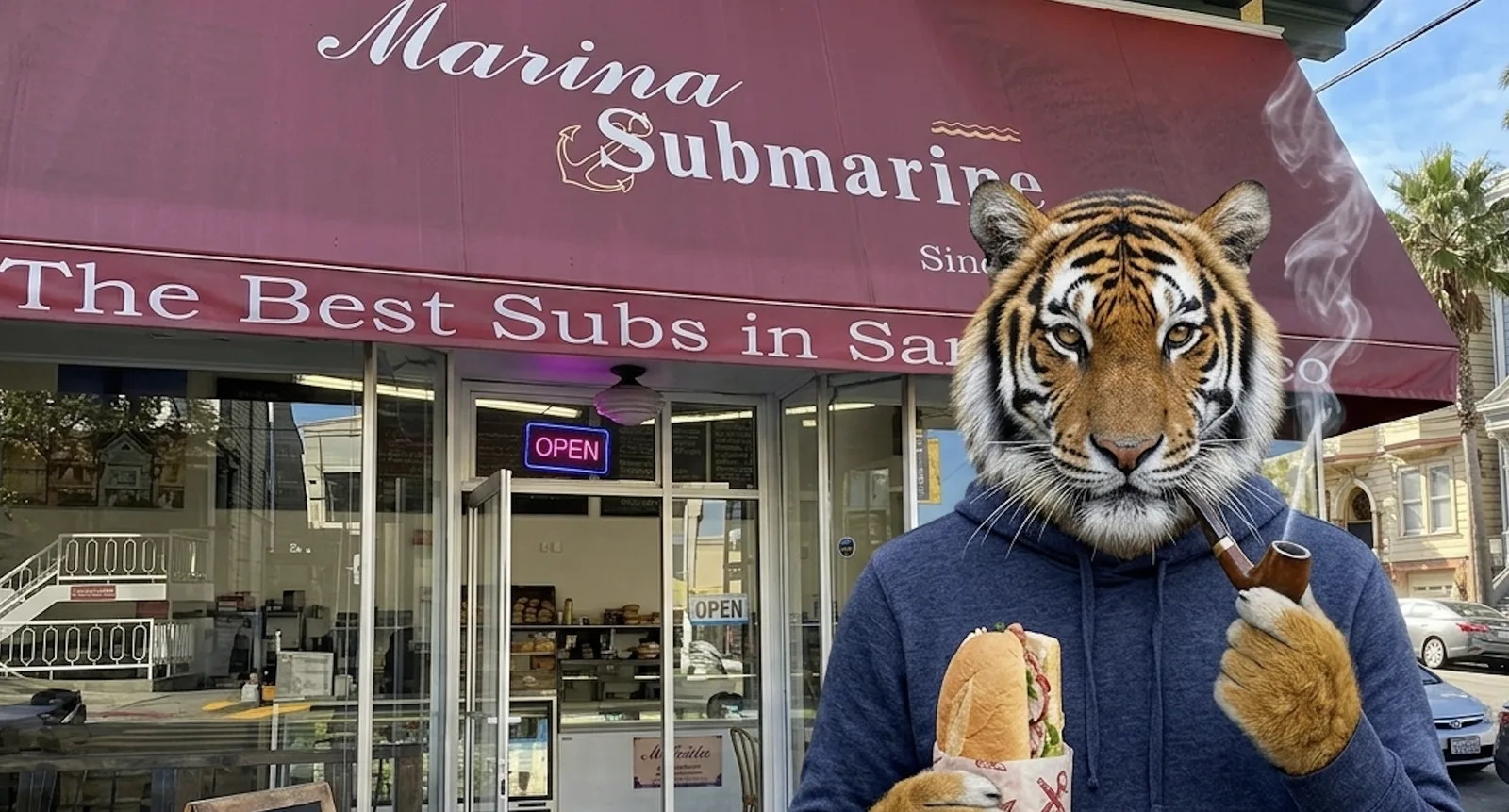
When I was growing up in San Francisco there was a sandwich place 3 blocks from my house called Marina Submarine, a Union Street institution since 1975, owned by a Korean man named Kyu (pronounced “Cue”). Kyu was probably in his 50s in the 1990s, and he remembered the regular orders of his devoted 17-year-old patrons in a way that made every one of us feel like the favorite. I always made a point to stop by when I was in town and he remembered me long into my 30s, and the Kyu smirk-of-recognition never got old.
Kyu retired in 2022, after generations of regulars. He never really hired anyone; maybe a kid at the register on a busy day, but Kyu made every sandwich himself, which meant you waited and it was worth it. While chains popped up all up and down Union Street, Marina Sub stood strong and wouldn't even update their old and dingy awning.
For years the operating logic was be everywhere, fast. Mr Porter delivered luxury next day and Farfetch made Milan arrive at your suburban door. Amazon turned overnight access to everything into a default. Agentic AI is now promising to take it further — buy, ship, deliver, before you knew you wanted it. Scale was the proof. Anything local was a constraint to overcome.
Instead, the brands winning now are the ones where origin is an inextricable ingredient. When ChatGPT is the one describing all the products, when every brand sounds like every other brand, when the algorithm makes everything feel like everything else — being from somewhere specific is the one distinction that doesn't compress. The brands quietly winning in 2026 are the ones that can't be instant. The ones where the address is the product.
You can't AI a hometown.
Marina Sub didn't survive because Kyu was clever about scale. It survived because he refused to be anywhere else. So stop sanding the local accent off your product. Figure out which parts of you are of a place and double down on them.
That's the brand brief and the personal one.
— NB