
SUNDAY SCARIES: Every Day is Mother's Day
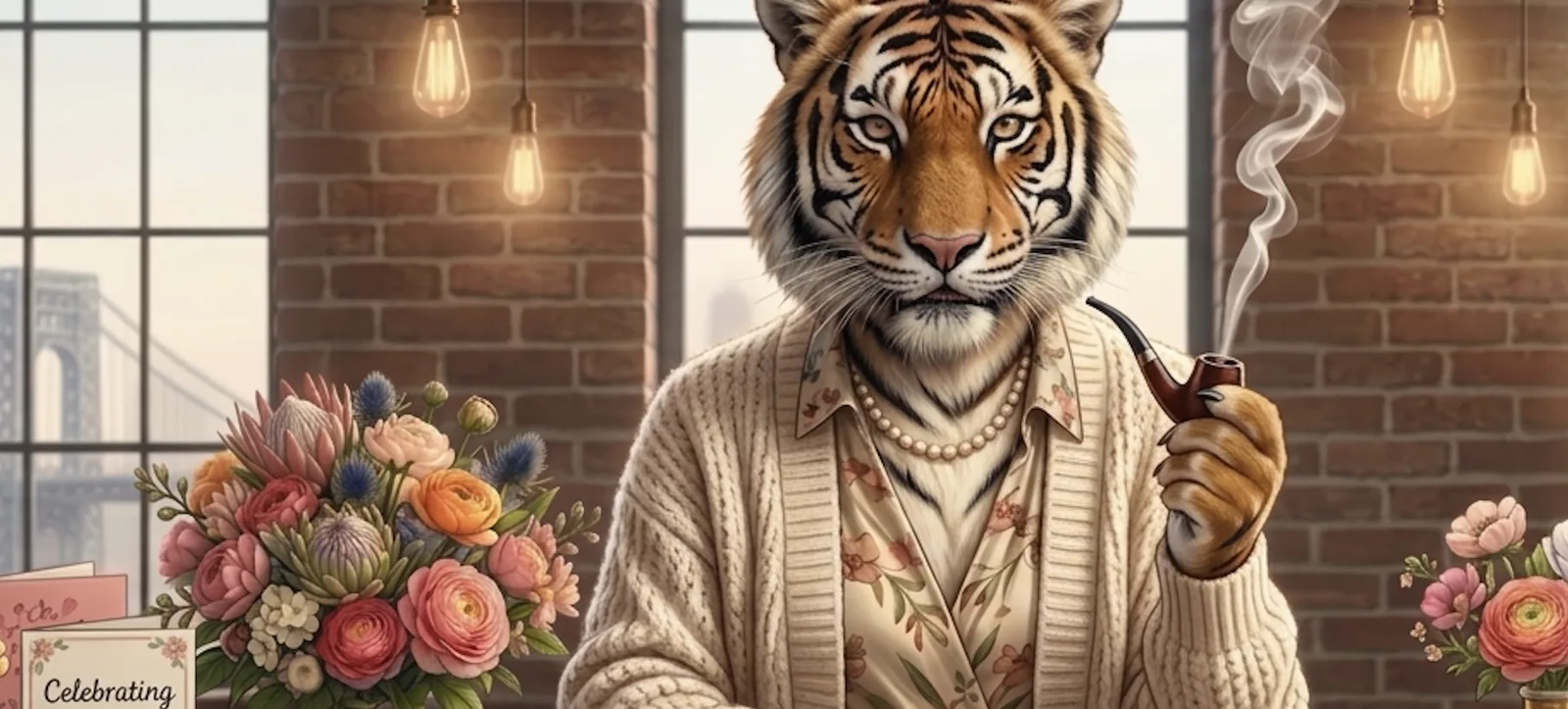
Mothers deserve recognition every day; the second Sunday in May is just when the Hallmark cards say it. Mothers are the OS at the center of the American household. Moms make the decisions in nearly every category, every day of the year, but the marketing industry built a $38 billion holiday around the same consumer it treats like a sitcom character for the other 364 days.
1. Mom Math
Dads are responsible for 1.2% of decisions about their children's clothing in American households. Moms cover the other 98.8%. In other words, Dads buy one sock and Mom buys the rest of the kids' clothes.
That math repeats across nearly every category marketers call “the home”: groceries, healthcare, household goods, school supplies, kids' tech.
Women drive 70-80% of all US consumer spending influence, and 78% identify as their household's primary shopper. And that includes the categories the industry still markets to men: 67% of men's razor buyers are women, 58% of buyers of power tools, 57% in video games. She buys his shaving cream too.
She is, by any measure, the most-targeted consumer in America. She is also the one most likely to be addressed by an agency with all of the depth, care, and nuance of a photo eating salad in yoga pants.
Takeaway: The math says she's the main character. The marketing still treats her like a stock photo.
(Sources: Chain Store Age, December 2024; NIQ "Shaping Success," 2024; Numerator "Breaking Stereotypes," 2024)
2. MomGPT
ChatGPT has become the second opinion parents never got from the pediatrician.
71% of parents have tried ChatGPT, and more than half have used it for parenting questions specifically. A University of Kansas study found that parents now rate AI-generated childcare advice as more credible, moral, and trustworthy than advice from a healthcare professional whose name they don't recognize. A February academic paper tracked why mothers are migrating from Facebook parenting groups to ChatGPT and Gemini. The reason was specific: 41.3% said they were leaving Facebook groups because they expected judgment from the other moms — and AI didn't judge.
The mom-tech ecosystem now reads like its own product category. Pampers built an AI sleep coach with a Yale pediatrician. Nanit and CuboAI track breathing, sleep, and cry patterns. Robin Baby lets a mother log feedings by voice while she's still nursing.
Media coverage of the topic often makes it seem like AI is invading motherhood. But that betrays the impetus and intelligence in the choice. ChatGPT treats mothers' questions like any other query, without the mansplaining. And since the male-dominated medical system has been telling mothers they're probably overreacting for decades, AI is clearly the more objective audience.
Takeaway: Mothers don't need rescuing from AI. They need an audience that won't tell them they're overreacting.
(Sources: Homewood Health, October 2025; Journal of Pediatric Psychology / Association of American Universities; arxiv preprint, February 2026)
3. The Mother's Day Industrial Momplex
Americans will spend a record $38 billion on Mother's Day this year. The average shopper plans to drop $284.25, and 84% of US adults will celebrate. The category breakdown: $7.5 billion on jewelry, $6.4 billion on outings, $4.4 billion on electronics (the first time the category has cleared $4 billion), $3.2 billion on flowers, $1.3 billion on greeting cards. Three out of four shoppers will buy flowers. Nearly the same will buy a card.
The gift, in other words, is largely the same one it was a hundred years ago.
What mothers actually want is something else. A Rutgers Center for Women in Business survey released this week found mothers are 2.4 times more likely than fathers to prefer time alone over a shared family activity — 41.7% to 17.6%. An Ohio State study found 68% of mothers report parental burnout. For fathers, it's 42%.
Call a 26-point burnout gap what it is: an unfair distribution of work that everyone in the household can see, dressed up once a year as a holiday she's expected to enjoy. And the industry's answer to that gap is $7.5 billion in jewelry.
Takeaway: The Industrial Momplex isn't giving mothers what they want. It's trying to distract from the inequality right in front of everyone.
(Sources: NRF / Prosper Insights, 2026; Rutgers Center for Women in Business via Fast Company, May 2026; Ohio State University parental burnout study, 2022)
4. What Mom Really Wants
The most interesting purchase a mother makes on Mother's Day is the one she makes for herself.
A generational survey published this week found that 23% of mothers under 45 plan to spend at least part of the day on something just for themselves — solo, deliberate, alone. That's three times the rate of mothers 45 and older. Among single mothers, 45% buy a Mother's Day gift for themselves — a category retailers track and don't talk about.
The bigger pattern lives the other 364 days. The US women's wellness category — supplements, hormone health, sleep aids, recovery products — was valued at roughly $290 billion in 2025 and is projected to clear $312 billion this year. Functional food and beverages marketed specifically to women account for 57% of that, and Millennial women lead the cohort.
Most of what gets called “the wellness boom” is mothers buying themselves the things nobody else thought to. The noise-canceling headphones she shouldn't have to explain. The out-of-network dermatologist she pays for out of pocket. The additional set of car keys she keeps so she can leave the house without making a formal announcement. The solo trip she takes that doesn't mean D-I-V-O-R-C-E.
Takeaway: Her self-gift isn't about Mother's Day at all. It's the whole ballgame in disguise.
(Sources: TheStreet, May 2026; Grand View Research, "Women's Wellness Products Market," 2025; MNTN Research, April 2026)
This Week's Red Thread: Every Day Is Actually Mother's Day
The very first Mother's Day was 118 years ago today, May 10, 1908, in a small church in Grafton, West Virginia.
Anna Jarvis organized it to honor her own mother, Ann Reeves Jarvis, who'd had thirteen children, only four of whom lived to adulthood, and who spent her life organizing neighborhood women around lowering infant mortality. The holiday was born from grief and unglamorous labor.
Within a decade, Anna Jarvis was horrified by what the holiday had become. Florists tripled their prices for carnations every May. Hallmark printed sentimental verses by the millions. By the 1940s she was campaigning to have the holiday removed from the calendar entirely. Sadly, she died in 1948 in a Pennsylvania sanitarium — blind, deaf, and broke. (Her bills were reportedly paid by the floral and greeting card industries she'd spent her life fighting.)
But she was exactly right. The holiday isn't the truth — the job moms do is the truth. Every day, in every category. The brunch ad once a year doesn't fix the other 364.
My mom's mom was not a great mom by any measure. Among many other things, my mom was forced to eat fruit that my grandmother was too cheap to throw out, even after it had turned. To this day, orange juice is the closest she'll come to fresh fruit. One year, her mother gave her the neighbor's secondhand bike for her birthday. Riding it around town hearing whispers was as mortifying for my mother as a movie would make it.
So when my mom was raising us, she made sure my brother and I would never feel that shame, regardless of what our wealthier friends could afford. What she learned from her own mother, my mother taught herself to undo. Pure force of will.
That's the relationship the industry doesn't understand, or doesn't want to admit. Every mother, stepmother, mother-in-law, godmother, grandmother, single mom, and dog mom making everyone else's lives possible, quietly, with no greeting card aisle to commemorate it.
Because every day is really Mother's Day.
The card store gets the one. The mothers give us the other 364.
— NB