
SUNDAY SCARIES: Delaying Disaster
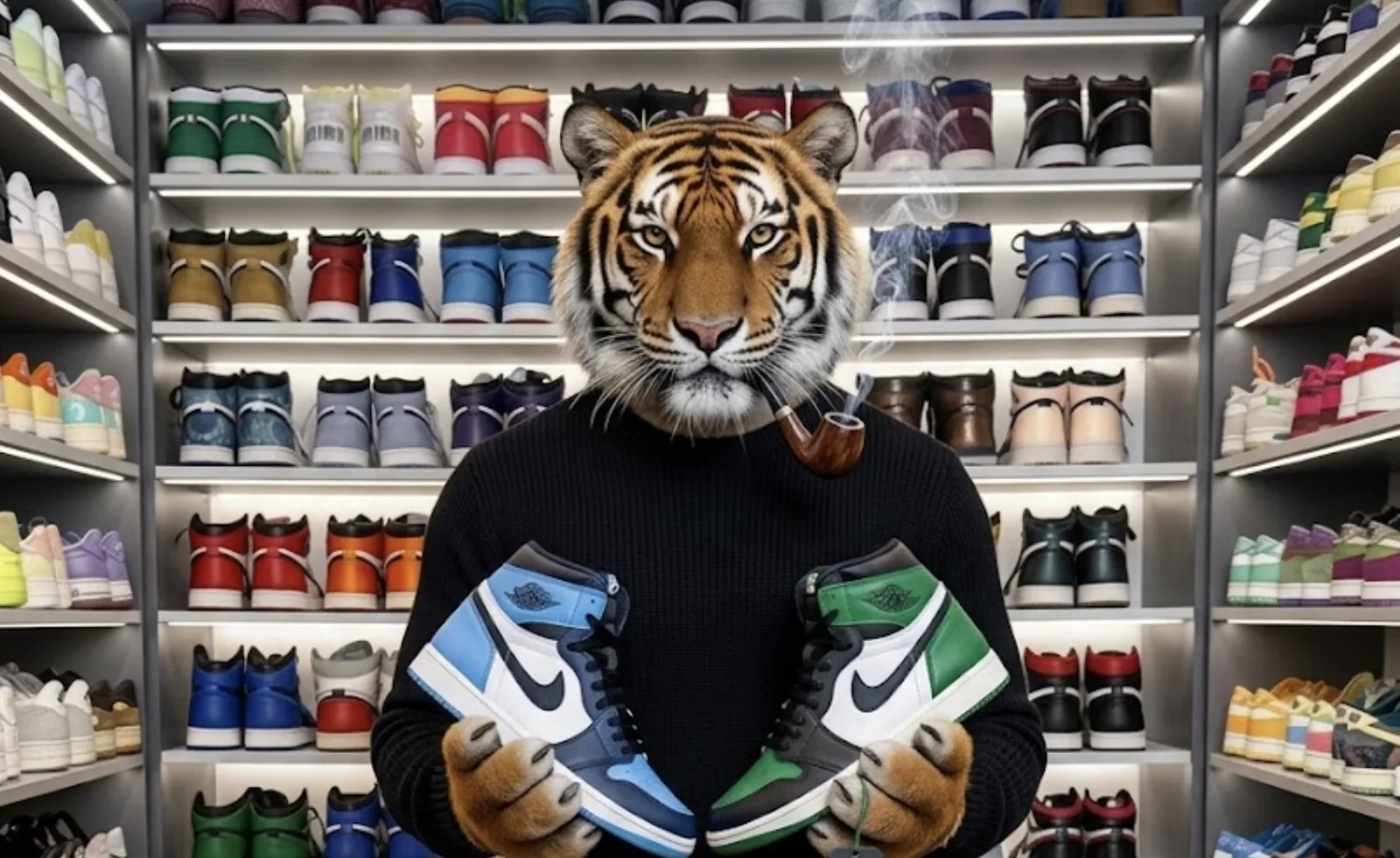
As my friends and family (and my Prime order history) would all attest, I am a big fan of “instant gratification”. Shipping is a tough waiting game, and the dopamine hit of adding a new pair to my 350+ sneaker collection hits even harder if I know it’s arriving quickly with the StockX speedier delivery. At this point, I’m a responsible 47 year old and my unwillingness to delay gratification is a preference I can afford. But I’ll admit it used to be more pathological and prioritizing immediate satisfaction would frequently mean postponing the inevitable and unpleasant reality; the negative bank balance, the bad relationship, or worse.
This week, the world feels like it’s wrestling with the same debate and choosing the irresponsible path, picking the immediate satisfaction and setting up the Delayed Disaster.
1. Voting for Today
The futurist Sinead Bovell is currently batting 1.000 in my book. On Friday, she published her latest substack that asked whether our institutions are built for this century, and she takes the spine of her argument from economist Philippe Aghion. I didn’t know who he was either but he won the Nobel for the theory of growth through creative destruction, and his key finding is that the institutions which help a country catch and keep up are not the same type of institutions it needs once it is at the frontier. The catching up only requires imitation and a bit of patience, because theoretically somebody else has already proved the thing works and your only job is to copy it well. At the sharp end of the research is that these catch-up institutions work largely because they enrich the people who benefit from them, and those people then buy the power to keep everything where it is. Aghion describes the self-interest circle by saying that such policies “create and enrich their own supporters.” Sinead comes at it from the view of a voter. Her position, and I think this is the right one, is that preserving what institutions do for democratic life is a separate question from preserving the shape they currently have. A democratic institution that’s replaced every two years is structurally incapable of seeing an effect that takes twenty years to arrive. And by the time the effect is large enough to appear as a disaster, it is also too large to reverse.
Sinead’s two examples are very real and worth mentioning:
The first is that private companies now hold critical infrastructure, communications and cloud and satellite networks among them, and no democratic body has a working mechanism to check that concentration or any anticipatory capacity to see the next risk coming rather than legislating after it lands.
The second is that social insurance is built on an assumption of continuous workforce participation and the payroll tax revenue that follows from it, which means that if AI genuinely disrupts employment the foundation of those programs goes with it, and redesigning that foundation is a twenty-year project nobody has started.
But, as any politician knows, voters vote for immediate relief. They vote for whatever helps them this year, which is rational but it makes preserving the future both theoretical and unpopular in the voting booth.
Takeaway: Nobody needs to be corrupt for institutions to fail. They just need to be up for reelection.
(Sources: Sinead Bovell, sineadbovell.substack.com, August 21 2026; Acemoglu, Aghion and Zilibotti, Distance to Frontier, Selection, and Economic Growth)
2. Exceptionally Short-Sighted Americans
The idea of American Exceptionalism is inspiring in theory but a total fallacy in reality. What makes America exceptional has always been the contributions of the rest of the world when they arrive on American soil.
Our entire history is that of people succeeding here and elevating the country around them. It’s closer to something that happened to us, because other people came. It’s well known that Great “Americans” like Alexander Graham Bell and Andrew Carnegie were born in Scotland, but the titans at the top of some of the biggest companies today are just as American as those two white guys.
Satya Nadella arrived in the USA in 1988 to do a master’s at Wisconsin. Sundar Pichai arrived in 1993 on a scholarship to Stanford, his father having spent roughly a year’s salary on the plane ticket. Arvind Krishna arrived in 1985 for Illinois, Shantanu Narayen a year or two ahead of him for Bowling Green. Microsoft, Alphabet, IBM and Adobe, worth about eight trillion dollars as of Thursday, run by four men who all came here on student visas from India between 1983 and 1993.
Today, their path might not have been open. Student visa issuance fell by 35.6% last summer, and fell by 63% for Indian nationals. The change is due to a new Homeland Security rule (as opposed to an act of congress) that’s taking effect September 15, which caps student admission at four years and cuts the window after graduation from sixty days to thirty. Universities and unions have sued and a hearing is set for September 3, which leaves whoever wins about twelve days to do anything about it.
We talk about American exceptionalism as though it’s in the water and dirt. But it’s in the steady stream of foreign-born brilliance. Cutting the pipeline of talent today won’t change the realities of those companies or their market cap next week. But closing our borders and stifling the immigrant influence will make a visible dent in our exceptionalism in 26 years, which is how long Nadella took to get from a classroom in Wisconsin to running Microsoft.
Takeaway: We’re too short-sighted to admit that our claimed exceptionalism is contingent on non-nationals lifting us up.*
(Sources: Chronicle of Higher Education via Inside Higher Ed; Shorelight analysis of State Department data; Federal Register 91 FR 44976)
*You’ll notice the richest man on the planet was not mentioned above but Musk is probably the greatest single living example of irony in history.
3. Blackjack for Beginners
This industry has been quoting Binet and Field and Ehrenberg-Bass at each other for a decade, so I won’t relitigate it. But what I could do is write a weekly blog on the fact that it hasn’t stuck. Despite all the studies, brand strength takes years to pay off, and performance pays off in weeks, so the part that finance chiefs care about is still the latter. And, like that, across the industry, the budget moves to performance, with assurance that there’s such a thing as a “performance brand” and that you really can optimize for emotional resonance. And then, while the efficiency numbers look terrific, the brand loses altitude invisibly, because a large brand can keep expanding momentarily even after you stop feeding it. But when the sales line feels the effect of the declining brand resonance, it’s too late for the CMO at the head of the table. By then the marketer is holding a performance program that has stopped scaling and a brand nobody wants to buy anymore.
And that’s why the average CMO tenure is an average of 4ish years. Ironically, the next CMO is usually hired specifically to fix the last one’s oh-so-shocking inability to build a brand purely through Advantage+ and Shopify, and arrives with even less patience than the last one and starts by cutting further into the brand building places. So the remedy for the last CMO’s mistake is usually a larger version of it, and around we go again.
Saying you’re “prioritizing short term returns” is a misnomer when you make it binary. Removing brand building and trying to endear yourself to humans with sales bundles and deals will eliminate the possibility of those long term returns. Brands are built in years and no amount of measurement or optimization or even AI will change that. Eventually, you’ll be left with no brand to measure.
Takeaway: To borrow from the blackjack table, optimizing without a strong brand is like the Austin Powers scene where he confidently holds despite only having a 3 and a 2 in his hand.
(Sources: Binet and Field, IPA; Spencer Stuart CMO Tenure Study, January 2026)
4. Career Lottery
I have taught at Denver Ad School since its very first semester, through the pandemic, and the most volatile times in my own career. But, for the first time, it has started to pose a moral quandary of sorts, because I am effectively preparing wonderful young people for an industry that seems to have stopped hiring people like them.
When the school started in 2019, the entry level of twenty to twenty-four year olds was nearly 11% of all American advertising jobs. That number was 6.5% last year. (It’s not news but staff-level positions at agencies are down more than 10 percent since 2022.) But for the next generation of creatives and innovative thinkers, the job market can be beyond bleak. Summer internships used to spike the hiring line, because you were already a proven commodity. But last year, only 60% of interns got a full-time offer last cycle, which is the lowest in five years.
What used to be the way in is now more like a career raffle held once a year. Over the past few weeks, my feed has a different former student or young creative posting about how their “great summer internship ended… and they need a real job.” But the industry’s answer is to protect the C-suite from AI first, and make that sound like innovation.
So they have AI make the first draft and then do the audit and then just do the deck, until there is nothing left for the entry level. And then the same industry that preaches that AI will never replace human ideas is left pitching AI ideas about Gen Z to clients because they don’t have any Gen Z talent in the office.
Takeaway: The industry will keep saving the executives until the day they look around and no one is there to do the work any more and realize a 47 year old is making their TikTok content.
(Sources: Live Data Technologies via eMarketer, August 2025; Adweek analysis of BLS data; NACE, August 2025)
This Week’s Red Thread: Create the Conditions Before They Create You
Every summer in Prince William Sound in Alaska, pink salmon come back and they’re counted.
The strength of that count is the basis for the vitality of the fishery. It is published, it is audited, and for thirty years it has looked healthy. The hatcheries were originally built because the wild runs were declining badly and somebody had to put fish back in the water, and for that purpose, they’ve worked. But then people looked more carefully at what was coming back.
A 2007 study in Oregon found that captivity can cost the salmon roughly forty percent of their reproductive fitness per generation, which compounds. And when millions of hatchery fish stray into wild streams every year and spawn there, you’ve got more and more homogenous and vulnerable fish populations. But none of it appears in the count, because a fish is a fish… when what you are doing is counting fish.
That’s what we seem to be doing these days.
In business, politics, marketing, and life, we’re largely just counting the good enough fish and feeling fine because we’d much rather have a good fish number today than confront what would happen to all our fish if something changed suddenly and all the salmon were identically susceptible.
TNC spends a lot of our time measuring the distance between the story a brand manages and the story the market actually holds. We call that a gap in clarity. Creating the conditions for success for the brand means closing the gap with the right brand story. But it also runs in time. What you measure today cannot show you what the disaster will be. For that, you have to admit what you aren’t preparing for.
To quote Bovell, “Now factor in AI, with every new model release seemingly accompanied by some strange capability that ‘no one saw coming’ and that warrants ‘immediate oversight.’ When, in retrospect, a lot of these risks, such as biosecurity or advanced cyber capabilities, have actually been discussed by various groups for years.”
To mark its hatchery fish, Alaska cycles the water temperature during incubation, which creates a pattern of bands into the ear bone before the fish has hatched. But to read it you have to kill the animal and cut the bone open. So the only way to learn whether or not your future is at risk is to destroy a piece of it, later, long after the people who made it that way have moved on.
And our only two paths are creating the conditions to succeed or setting up the disaster ahead.
— NB