SUNDAY SCARIES: CPG's Empty Shelf
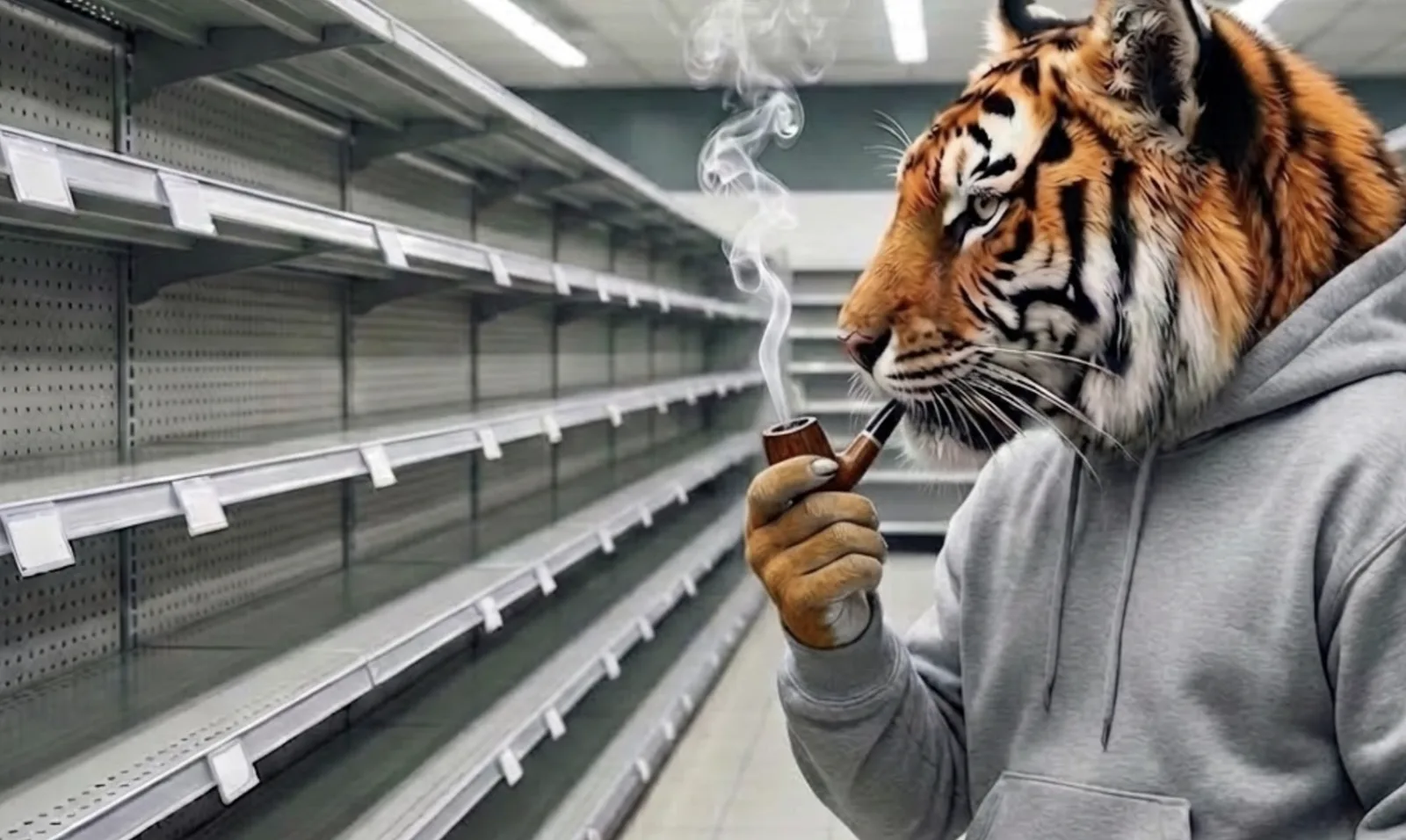
In January, Google used the phrase in a blog post about agentic commerce; “empty shelf” is the idea that AI agents now browse, compare, and buy products on behalf of humans, creating a digital shelf that nobody can see or touch. Meanwhile, the physical shelf, margin model, loyalty numbers, even conglomerate structure — are quietly disappearing. And much of the CPG industry is still staring at the spot where it all used to be.
1. Unilever Cleans Out the Cupboards
On Friday, Unilever confirmed it's in talks to sell its entire foods division — Hellmann's, Knorr, the lot — to McCormick for a potential $33 billion. This after spinning off ice cream (Ben & Jerry's, Magnum) last year. CEO Fernando Fernandez has been explicit: the future is “more beauty, more wellbeing, more personal care.”
It seems the century-old company synonymous with kitchen staples like Mayo has decided there's an expiration date on the business.
And that's actually the most revealing part of the deal itself. The board called the foods business “highly attractive” with “market-leading brands in growing categories.” So this isn't a fire sale. It's a philosophical concession. The conglomerate thesis — that scale across categories equals strength — has been quietly dying for years, and Unilever just admitted it. Food innovations and food margins can't possibly keep up with beauty. And in a tariff-ravaged, AI-disrupted landscape, focus beats breadth.
That raises questions that mid-market CPG companies have to confront sooner rather than later: if even the biggest consumer goods company on earth doesn't think it can win in food AND beauty at the same time, do you actually think you can win by spreading thinner?
Takeaway: Unilever didn't lose food. It chose beauty. That choice tells every CPG company in America that the era of "we do a bit of everything" is officially over.
(Sources: Bloomberg; Unilever official press release; Business Chief; Euronews; Food Navigator)
2. Your Biggest Customer Is Blind
Google's guidance to CPG leaders in the same January post is blunt: “Treat your product data as your new packaging.”
NIQ and Kearney called agentic commerce “the new growth frontier.” McKinsey says AI agents will “anticipate consumer needs, navigate options, negotiate deals, and execute transactions.” IBM reports that 45% of consumers already use AI for part of their buying journey. And Morgan Stanley projects nearly half of all online shoppers will use AI shopping agents by 2030, accounting for a quarter of their spending.
What that means for the person running a brand is that the thing you spent decades perfecting — your packaging, your shelf placement, your endcap display, your Super Bowl spot — is being bypassed by a machine that reads metadata. If your product uses sustainable sourcing but that attribute isn't tagged in structured data, an AI agent searching for “verified sustainable packaging” will never find it. You're invisible, and not because you failed. You were just never legible to the thing making the decision.
The AI agent shopping on behalf of your consumer doesn't care about your Pantone or your hero image. It reads your ingredient list in standardized format and your schema markup. That's your new packaging. And 59% of CPG executives already expect AI agents to own the consumer relationship within five years — so the people running these companies know it's coming. They just haven't rebuilt anything yet.
Takeaway: Your brand was designed to be chosen by a person standing in an aisle. Increasingly, the customer is an algorithm that's never been to a store, and if your data can't speak to it, your product doesn't exist at the moment of purchase.
(Sources: Google Cloud "The Invisible Shelf"; NIQ/Kearney "The New Growth Frontier"; McKinsey; IBM Institute for Business Value; BCG)
3. A 50% Margin Is the New 30%
A new study from Kickfurther surveyed 200+ CPG brands and built a cost-stack model across every major expense layer. The finding that should be stapled to every CFO's monitor: a 50% gross margin in 2026 is the equivalent of a 30% gross margin in 2015.
The keystone markup — buy for $10, sell for $20 — worked when tariffs averaged 2.5%, customers bought in stores, and fulfillment meant handing someone a bag. After Amazon fees, digital customer acquisition costs, 3PL logistics, and tariff exposure, brands running at keystone are now losing money on every unit sold. Some of them don't even know it yet.
Yale's Budget Lab confirms the squeeze: tariff passthrough to consumer goods prices is running between 40% and 76% for core goods. 75% of consumers expect tariff actions to push grocery bills higher, and 80% of shoppers say they're actively changing how they buy. Unlike 2022, when price hikes were absorbed under the cover of general inflation, consumers in 2026 are tracking tariff news like a fantasy league. They know exactly why things cost more. And they're switching.
Takeaway: The margin model most CPG brands were built on doesn't exist anymore — not because of one thing, but because of everything at once. Tariffs, fulfillment, platform fees, and a consumer who's done pretending they don't notice.
(Sources: Kickfurther CPG Margin Report; Yale Budget Lab "Tracking the Economic Effects of Tariffs"; Food Dive; Numerator)
4. The Loyalty Hallucination
The Wise Marketer published a piece this month that should be required reading at every CPG offsite in America: “Customer Loyalty Isn't Dead. But It's More Stuck Than Ever.”
The numbers: 90% of executives believe their customers are loyal. 40% of consumers agree. That's a 50-point perception gap — the widest in over 30 years. 76% of consumers say they see no differentiation between brands (up from 72% last year). Forrester's CX Index hit an all-time low for the second consecutive year. And Razorfish found that 65% of marketers think customers return for “brand love,” while fewer than 1 in 4 consumers cite emotional attachment as a reason they stay.
So what IS keeping them? Habit, mostly. Inertia. The hassle of starting over. The auto-refill they forgot to cancel. The algorithm that keeps surfacing the same product because it was the last one purchased.
I'm calling this the loyalty hallucination — the gap between the relationship you think you have and the routine you actually have. And it matters more right now than it ever has, because the invisible shelf doesn't reward inertia. An AI shopping agent doesn't have a “usual.” It compares options every single time, from scratch, based on data. The moment agentic commerce scales, every CPG brand that assumed repeat purchase meant loyalty is going to find out that their customers weren't choosing them — they were just not un-choosing them. There's a big difference.
Takeaway: Loyalty and habit look identical on a spreadsheet. They look completely different to an AI agent that doesn't have habits.
(Sources: The Wise Marketer; Razorfish/GWI; VML Future 100 2026; Forrester CX Index; PwC; EY Loyalty Report)
This Week's Red Thread: Showing Up on an Empty Shelf
For about a hundred years, CPG was a visibility game. You won by being seen — on the shelf, in the ad, on the endcap, in the Sunday circular. The entire industry was organized around one principle: if the consumer can see you at the right moment, you win.
Be visible. Stay visible. Pay whatever it costs to remain visible.
That principle is breaking in four places at once. Unilever is walking away from the conglomerate model that let you occupy every shelf in every category. The margin math that funded all that visibility has been hollowed out until 50% buys you what 30% used to. The loyalty that justified the spending turns out to be inertia — and inertia only works on humans. And the shelf itself is being replaced by one that no human will ever see.
The new shelf isn't a visibility game. It's a legibility game. And those are two fundamentally different things. Visibility is about being seen. Legibility is about being understood — by a system that doesn't watch your commercials, doesn't care about your heritage, and picks the brand it can explain.
That shift from visibility to legibility is, I think, the most important strategic reframe in CPG right now. And it's the problem we've been quietly obsessing over at The Nuance Collective, (probably to an unhealthy degree).
We built a tool called the LLM Mirror™ that asks the legibility question directly: does AI actually know your brand exists, and if it does, can it describe you without hedging? We've run it for enough brands to know that the answer is usually uncomfortably logical. Most brands that think they have strong positioning discover they're a generic footnote in an AI response about their competitor. The machines aren't confused about you because they're broken. They're confused because your brand never gave them anything clear enough to hold onto.
We also measure something we call brand voltage with the Nu Factor™ — which is really just a structured way of asking whether a brand carries any distinctive signal, or whether it's interchangeable with the thing next to it. On a physical shelf, you could survive on placement and habit.
On the invisible shelf, you survive on signal — because the AI agent choosing on your consumer's behalf has no habits, no nostalgia, and no loyalty. It just picks the brand it can explain. Voltage is what makes you explainable.
The CPG industry spent a century getting very good at being seen. The next decade belongs to the brands that figure out how to be understood.
— NB