SUNDAY SCARIES: Beauty + AI, Perfectly Imperfect
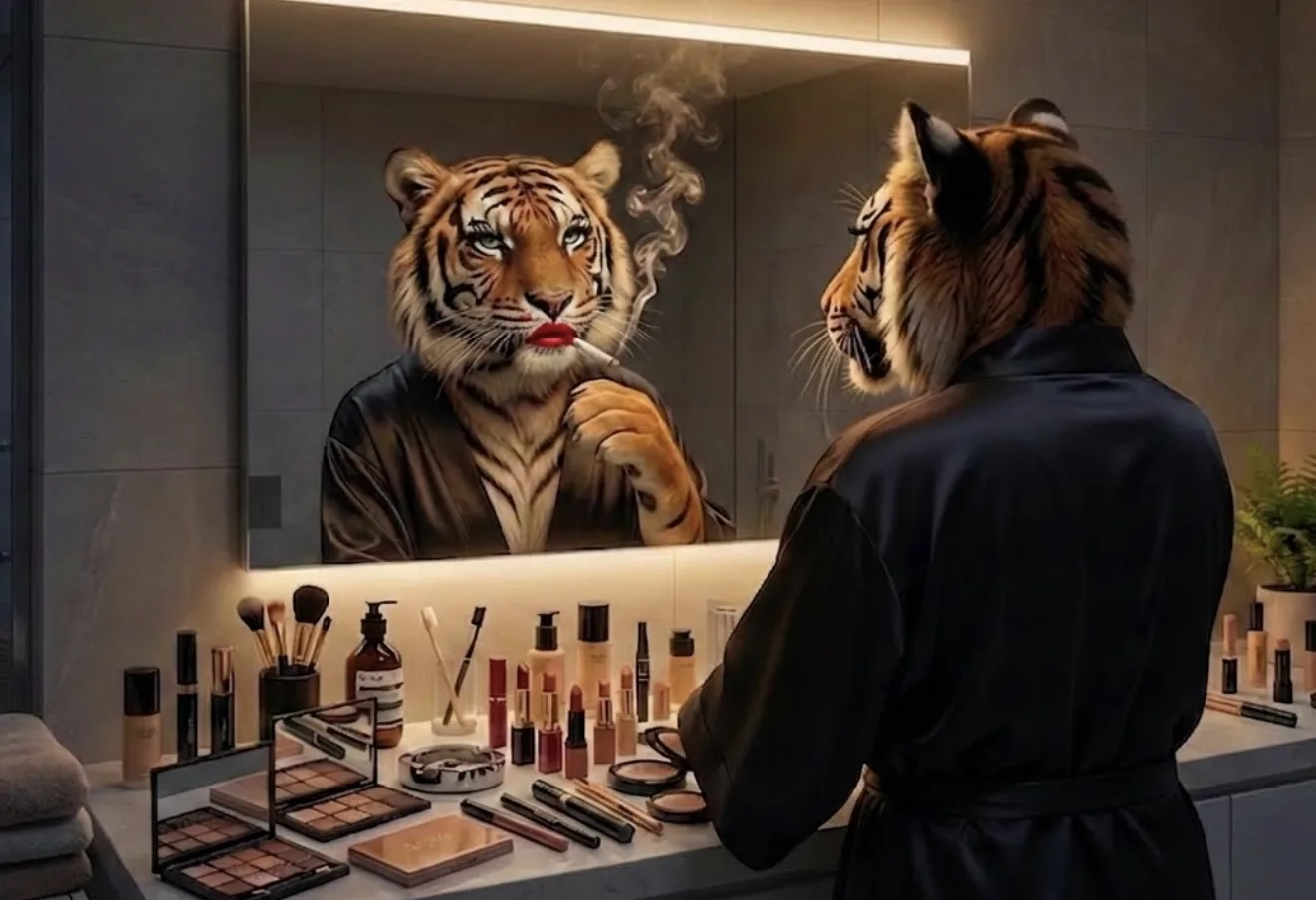
Beauty becomes the first category where the consumer rejects optimization itself...
1. Same Building, Different Values
One in three women feel pressure to change their appearance from images they know aren't real. Knowing it's fake doesn't protect you from wanting to look like it. The psychology is clear and Dove funded the research and then built a campaign around it. Dove pledged to never use AI to create or distort women's images and the response was enormous, simply because the insight is genuinely devastating.
Then Unilever — yep, same corporation, same year, and probably the same building in Englewood Cliffs, NJ — built a Beauty AI Studio with Brandtech to pump out AI-generated content across the rest of its portfolio. (Ahem... it would take a supercomputer to develop a more complete contradiction than that.)
The “No AI” pledge is on one floor of the Unilever office. The production department is on another floor. And the woman in her bathroom is hearing and seeing both and can't tell which floor they came from.
Takeaway: The gap between what a brand promises and what comes out in social and production is a trust problem wearing a governance costume. But the contradiction isn't just Unilever's.
(Sources: Dove "The Real State of Beauty" Global Report 2024; Marketing Dive; Unilever Beauty AI Studio w/ Brandtech)
2. The Surveillance You Can Moisturize With
L'Oréal has 14,500 terabytes of beauty data. Their AI assistant Beauty Genius is coming to WhatsApp — skin diagnostics, routines, product recs, all from a selfie and a chat. Their marketplace Noli decodes your “beauty profile” from over a million face scans. 85% of users say they shop with more confidence. The diplomatic pitch is “beauty for each.”
But to be clear, they're not just selling you foundation. They're collecting your face and selling you back what it tells them. Every conversation trains the model — not just for you, but for the next 400,000 people who look close enough.
L'Oréal's endgame is in the act of disappearing. Said another way, the best version of their AI strategy is when nobody says “L'Oréal” out loud. You just talk to an assistant that happens to sell you their stuff. The brand becomes plumbing. Invisible. Essential. (Completely unromantic). But you can make that bet when you've got a century of formulation science and more data than most governments.
Most brands can't afford to vanish. Most brands survive because someone picks them on purpose. The difference between L'Oréal's strategy and yours is the difference between the water company and Coca-Cola.
Takeaway: L'Oréal can afford to be invisible. You can't. If your AI strategy is borrowed from a company that doesn't need to be remembered, you're running someone else's playbook.
(Sources: Business of Fashion; L'Oréal Groupe VivaTech 2025 keynote / PYMNTS coverage; Glossy)
3. The Mess Is the Message
AI-generated beauty content looks better than it ever has. The lighting is immaculate. The skin is impossible. EEG research shows it produces weaker memory response in the brain than content made by a person. Gorgeous to look at and forgotten the second you scroll past. The most expensive wallpaper in advertising history.
The beauty industry spent twenty years showing consumers how to filter themselves. But now the filter is what they're scrolling away from.
A woman (@vannavvanna) went viral posting shots of her tiny antique bathroom with products tossed on a silver tray. Meanwhile, on TikTok, an AI-generated perfume influencer got yanked within days.
Real messes — the empties, the half-used, the clearly-been-touched-by-a-human — are what people save and screenshot. Ads need to show positive results, but beauty brands that are filling their organic content calendars with AI-generated assets are building a brand no one will remember next month.
Takeaway: If you're using a machine to produce more content, the machine is making more pieces worth less and less. Congratulations.
(Sources: @vannavvanna; "Navigating AI and Human Expertise in 2026 Beauty Marketing"; Business of Fashion; Inc.)
4. The Algorithm That Can't See Your Customer
The promise of AI in beauty is personalization and optimization for everyone. But the problem is that the machines doing the optimizing can't actually see everyone they're personalized for.
A 2025 study generated 4,000 AI images of skin conditions across four leading platforms. 10% depicted dark skin. 15% accurately showed the condition they were asked to show.
You can't optimize for a customer your tools can't see. The data skips it without asking. And the customer who doesn't see herself in your recommendation won't bother to type up a complaint. She'll just go somewhere else... permanently.
Takeaway: When researchers needed a more inclusive skin tone measurement, they didn't find it in a lab. They found it in Fenty's 40-shade foundation range.
(Sources: Joerg et al, Journal of the European Academy of Dermatology and Venereology 2025; ACM Journal on Responsible Computing "Which Skin Tone Measures Are the Most Inclusive?")
This Week's Red Thread: The One Thing AI Can't Sell
Every other category treats AI optimization as an upgrade. Faster, cheaper, smarter. Sure.
But beauty is the first one where the consumer is treating optimization as a downgrade. The tech succeeds but it's not succeeding at the right thing.
Putting yourself in the aisle or at a beauty counter — a real one, with a real person — where someone looks at your face, puts down one shade and picks up a different one, and says “Trust me. This one.”
That's taste, plus confidence, plus the human giving a shit. Not data. The person betting their expertise on making you feel like yourself is an equation AI cannot solve.
An algorithm can match your undertone to four decimal places. But it cannot care whether you walk out feeling right. And “feeling right” is the entire transaction. The only reason the category exists.
So, if the cool AI you're building does everything except create that feeling (the feeling that makes your consumer reach for your product instead of the competitor's) what exactly are you building toward?
— NB