
PRESIDENTS' DAY SCARIES: Presidents and Pretenders
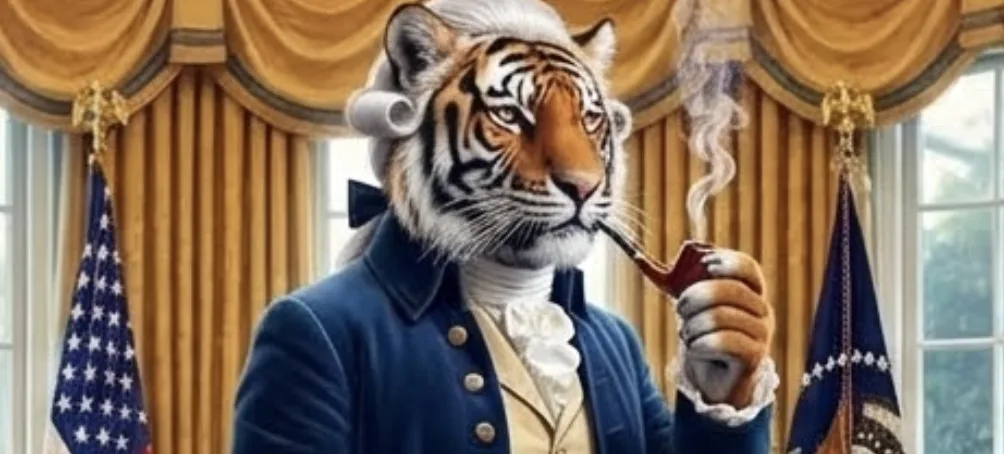
The Confessions of a CMO report — a global, fully anonymous report from Worldwide Partners and Jon Evans' Uncensored CMO — surfaced a set of archetypes that are painfully honest about what the role actually becomes. It got me thinking: The President of the United States is also the biggest brand-stewardship job in the world. So for a special Presidents' Day Scaries, here are four presidents as four CMO archetypes.
1. Teddy Roosevelt — Chief Momentum Officer
In 1898, Teddy Roosevelt charged up San Juan Hill in Cuba. Historians still argue about whether it was strategically necessary. It doesn't matter. It made him governor of New York within months and president within three years. This is a man who understood that momentum is its own argument.
First president to ride in a car. First to fly in a plane. First to leave the country while in office. Built the Panama Canal because he got tired of waiting for Colombia to say yes — so he helped Panama become a country and cut the deal with them instead. Launched the national parks system because he decided America's land was a brand asset worth protecting.
Every CMO who's ever shipped a campaign before legal finished reviewing it is channeling Teddy Roosevelt. He understood something the Confessions study confirms: meaning without motion is just philosophy. And a mediocre strategy executed brilliantly is better than a brilliant strategy executed mediocrely. The CMO who waits for perfect alignment is the CMO who gets replaced by the one who moved.
Lesson: Momentum means never letting process become a substitute for progress. TR didn't charge that hill because he had a plan. He charged it because he knew standing still was the most dangerous thing he could do.
2. LBJ — Chief Machiavellian Officer
Lyndon B. Johnson passed the Civil Rights Act, the Voting Rights Act, and Medicare. He built the Great Society. He also bullied senators in bathrooms, called people at 2 a.m. to scream at them, and reportedly showed his surgical scars to reporters to assert dominance. While he'd never survive HR in 2026, the man got more done through raw political force than most presidents accomplish with goodwill.
He is the shadow archetype at full power. Every CMO who has ever hit their quarterly numbers through backroom deals, internal maneuvering, and sheer force of personality is running the LBJ playbook. And for a while, it works. The numbers are there. The board is happy. The org chart bends to your will.
Then Vietnam. The manipulation that built everything became the thing that destroyed it. He chose not to run for reelection — the only president in modern history to look at the job and say, essentially, I broke this and I know it.
Lesson: The Confessions report found that Machiavellian CMOs are often the most effective operators in the building — right up until the moment the organization realizes the brand has been serving the leader instead of the other way around. LBJ built more than JFK. But nobody hoped their kids would grow up and be like LBJ.
3. William Henry Harrison — Chief Day-One Officer
On March 4, 1841, William Henry Harrison delivered the longest inaugural address in American history. Two+ hours. In the rain. No coat. No hat. He was 68 years old and wanted to prove he was tough enough for the job.
He was dead 31 days later.
Harrison is the CMO who launches a massive rebrand in week one. New logo. New tagline. New agency roster. New org structure. Before they've read the P&L. Before they've talked to sales. Before they understand why the last three CMOs flamed out in the same chair. They confuse performance with preparation and run a series of sponsorships and sweepstakes instead of figuring out why Target and Walmart are de-listing their brands.
Lesson: Every CMO tenure that ends in 18 months probably started with its own type of two-hour inaugural address in the rain. But the job doesn't care how impressive your entrance is. Harrison had genuine public support but he put it all into the speech and didn't live long enough for the presidency.
4. James K. Polk — Chief Paradox Officer
You probably can't name three things about James K. Polk. Most people can't. That's the point.
Polk ran for president in 1844 on four specific promises: annex Texas, settle the Oregon boundary, acquire California, and lower tariffs. (Yes — LOWER tariffs). And you know what? He did all four. In one term. Then he kept his other promise — that he'd only serve one term — and went home. He died three months later, but that's not relevant here.
Historians like Doris Kearns Goodwin consistently rank Polk in the top 12-15 presidents. He is the most effective president almost nobody thinks about. He didn't give great speeches. He wasn't charismatic. He had no signature persona. He just outlined what the brand most needed, delivered it, and left.
Polk is the CMO that doesn't need to confess. They're the paradox the report identifies as the philosophical center of the role: you have to change to match the time in order to stay consistent to your brand. Polk expanded the country by a third while keeping it recognizably itself. New expression. Protected essence. No drama. No keynote at Cannes. No LinkedIn posts about “authentic leadership.” Just the work, done, on time, as promised.
Lesson: Polk is proof that you can be transformational without being loud. The CMO who quietly doubles brand value and leaves before the victory tour is the one the next three CMOs spend their tenures trying to match.
This Week's Red Thread: Presidents and Pretenders
POTUS is the most scrutinized brand-stewardship role in history:
You inherit a brand you didn't build. You operate under short-term pressure with long-term consequences. Half the people in every room want your job. The other half want you gone.
And you answer to a board that doesn't understand what you do but has strong opinions about how you're doing it.
But the consistent aspect of the presidents we remember isn't that they're the ones who held the job longest. They're the ones who knew what they'd refuse.
Polk refused to stay a single day longer than the work required. TR refused to stand still. LBJ refused to lose a vote — and then he refused the job itself. (And Harrison refused to admit he was cold.)
And the CMOs who survive? Same principle. The role isn't defined by what you do. It's defined by what you won't do. The Confessions report is full of shadow archetypes, and the bad ones refused the wrong thing: accountability, honesty, refused to leave when the job was done or to admit when they were standing in the rain without a coat.
But your brand isn't built by what you do. It's built by what you refuse.
So here's the question for the long weekend: What's your line in the sand refusal? What's the thing you won't do that defines the leader you actually are?
Because the job is fleeting. But the refusal is what survives.
— NB